


Page 395 - Materials Science and Engineering An Introduction
P. 395
10.3  The Kinetics of Phase Transformations  •  367

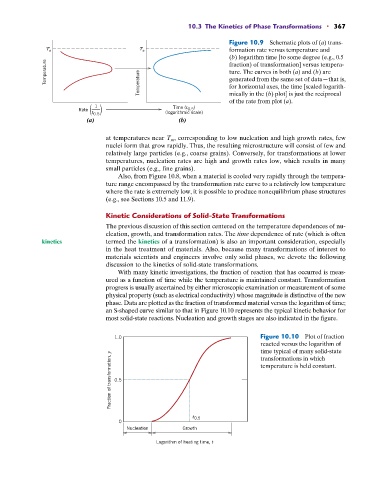
                                                                      Figure 10.9  Schematic plots of (a) trans-
               T e                         T e                        formation rate versus temperature and
                                                                      (b) logarithm time [to some degree (e.g., 0.5
               Temperature                 Temperature                ture. The curves in both (a) and (b) are
                                                                      fraction) of transformation] versus tempera-
                                                                      generated from the same set of data—that is,
                                                                      for horizontal axes, the time [scaled logarith-
                                                                      mically in the (b) plot] is just the reciprocal
                                                                      of the rate from plot (a).
                             1                       Time (t  )
                         Rate                            0.5
                             t 0.5                 (logarithmic scale)
                           (a)                         (b)

                                 at temperatures near T m , corresponding to low nucleation and high growth rates, few
                                 nuclei form that grow rapidly. Thus, the resulting microstructure will consist of few and
                                 relatively large particles (e.g., coarse grains). Conversely, for transformations at lower
                                 temperatures, nucleation rates are high and growth rates low, which results in many
                                 small particles (e.g., fine grains).
                                    Also, from Figure 10.8, when a material is cooled very rapidly through the tempera-
                                 ture range encompassed by the transformation rate curve to a relatively low temperature
                                 where the rate is extremely low, it is possible to produce nonequilibrium phase structures
                                 (e.g., see Sections 10.5 and 11.9).

                                 Kinetic Considerations of Solid-State Transformations
                                 The previous discussion of this section centered on the temperature dependences of nu-
                                 cleation, growth, and transformation rates. The time dependence of rate (which is often
              kinetics           termed the kinetics of a transformation) is also an important consideration, especially
                                 in the heat treatment of materials. Also, because many transformations of interest to
                                 materials scientists and engineers involve only solid phases, we devote the following
                                 discussion to the kinetics of solid-state transformations.
                                    With many kinetic investigations, the fraction of reaction that has occurred is meas-
                                 ured as a function of time while the temperature is maintained constant. Transformation
                                 progress is usually ascertained by either microscopic examination or measurement of some
                                 physical property (such as electrical conductivity) whose magnitude is distinctive of the new
                                 phase. Data are plotted as the fraction of transformed material versus the logarithm of time;
                                 an S-shaped curve similar to that in Figure 10.10 represents the typical kinetic behavior for
                                 most solid-state reactions. Nucleation and growth stages are also indicated in the figure.


                                   1.0                                         Figure 10.10  Plot of fraction
                                                                               reacted versus the logarithm of
                                                                               time typical of many solid-state
                                  Fraction of transformation, y  0.5
                                                                               transformations in which
                                                                               temperature is held constant.


                                                           t 0.5
                                     0
                                       Nucleation       Growth
                                                Logarithm of heating time, t

