


Page 180 - Modular design for machine tools
P. 180
140   Modular Design Guide and Machine Tools Description


                                   MPS     LT      LF      LP      LC      LK
                                    PM     C*Z    C*(X + Y)  C*Z*(X + Y)  C*(X + Y) + C*Z  C*(X + Y)
                                 FGF  RAT  -        -      -        -       -
                                    AM     X + Y    Z      -      Z*(X + Y)  Z*(Y + X)
                                 Note:
                                  Refer to   LTN     LFC     LTP
                                  JIS B0122  LTH             BTP
                                 Tool is     BTN                  LCH    LSK
                                 indicated by  BTH   BFC
                                 hatching                    LCO
                                             DCN     LRC
                                                     BRC
                                                     LCT  MPS; Machining Process Symbol
                                                          PM ; Principal Motion
                                                     LFR  RAT; Rotary Motion Axis of Tool
                                                     BFR
                                                          AM ; Auxiliary Motion
                                                          FGF; Form-Generating Function
                                                       (a)
                  MPS    FA    FB    FC   FD    FE    FF   FG    FH    FI    FJ
                   PM    Z     Z    X + Y  X + Y  X + Y  C  C   C*(X + Y) C*(X + Y) + X*Y  C*Z
                 FGF  RAT  DX + DY  DX + DY  DX + DY  DZ  DZ  DX + DY  DZ  DX + DY  DZ  DX + DZ
                   AM   C*(X + Y)  C*X*Y  C*Z*(Y + X)  C*Z  C*Z*(Y + X) Z*(X + Y)  Z*(X + Y)  Z  Z  X + Y


                                               (b)
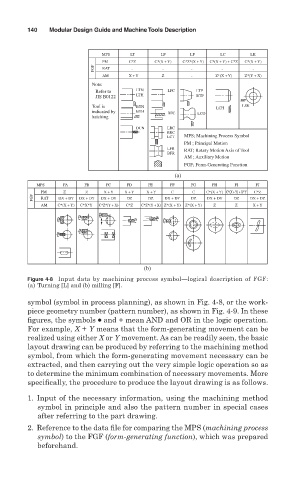
               Figure 4-8    Input data by machining process symbol—logical description of FGF:
               (a) Turning [L] and (b) milling  [F].
               symbol (symbol in process planning), as shown in Fig. 4-8, or the work-
               piece geometry number (pattern number), as shown in Fig. 4-9. In these
               figures, the symbols  ● and + mean AND and OR in the logic operation.
               For example, X + Y means that the form-generating movement can be
               realized using either X or Y movement. As can be readily seen, the basic
               layout drawing can be produced by referring to the machining method
               symbol, from which the  form-generating movement necessary can be
               extracted, and then carrying out the very simple logic operation so as
               to determine the minimum combination of necessary movements. More
               specifically, the procedure to produce the layout drawing is as  follows.
               1. Input of the necessary information, using the machining method
                  symbol in principle and also the pattern number in special cases
                  after referring to the part drawing.
               2. Reference to the data file for comparing the MPS (machining process
                  symbol) to the FGF  (form-generating function), which was prepared
                  beforehand.

