


Page 187 - Modular design for machine tools
P. 187
Application of Machine Tool Description to Engineering  Design    147

                                  lw
                                  Blank part
                                       Finished part


                                                           z' (C')
                d w max
                                                   n w
                                         v x (depth)  v z (approach)
                                r 1
                             PKt.1                      v
                        v 1fres                          x (approach)
                              v 1fx       v z (depth)
                        v 1fz                              x (A)

                                        v z (return)
                      x' (A')
                                         z' (C)
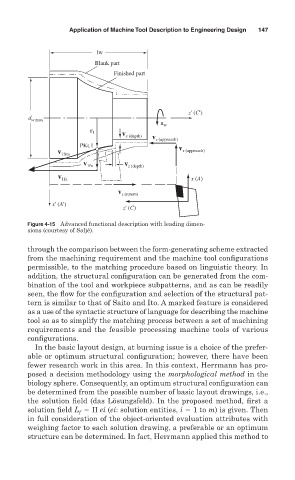
               Figure 4-15    Advanced functional description with leading dimen-
               sions (courtesy of Saljé).


               through the comparison between the  form-generating scheme extracted
               from the machining requirement and the machine tool configurations
               permissible, to the matching procedure based on linguistic theory. In
               addition, the structural configuration can be generated from the com-
               bination of the tool and workpiece subpatterns, and as can be readily
               seen, the flow for the configuration and selection of the structural pat-
               tern is similar to that of Saito and Ito. A marked feature is considered
               as a use of the syntactic structure of language for describing the machine
               tool so as to simplify the matching process between a set of machining
               requirements and the feasible processing machine tools of various
               configurations.
                 In the basic layout design, at burning issue is a choice of the prefer-
               able or optimum structural configuration; however, there have been
               fewer research work in this area. In this context, Herrmann has pro-
               posed a decision methodology using the morphological method in the
               biology sphere. Consequently, an optimum structural configuration can
               be determined from the possible number of basic layout drawings, i.e.,
               the solution field (das Lösungsfeld). In the proposed method, first a
               solution field L    ei (ei: solution entities, i   1 to m) is given. Then
                             f
               in full consideration of the  object-oriented evaluation attributes with
               weighing factor to each solution drawing, a preferable or an optimum
               structure can be determined. In fact, Herrmann applied this method to

