


Page 270 - Modular design for machine tools
P. 270
Engineering Design Fundamentals and Single Flat Joint Characteristics        229


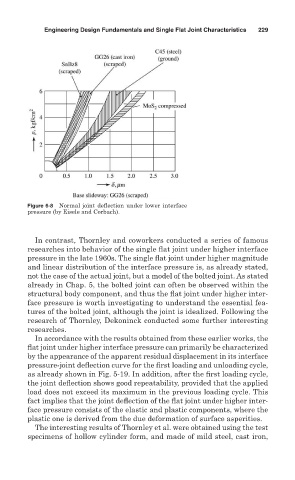
               Figure 6-8  Normal joint deflection under lower interface
               pressure (by Eisele and Corbach).


                 In contrast, Thornley and coworkers conducted a series of famous
               researches into behavior of the single flat joint under higher interface
               pressure in the late 1960s. The single flat joint under higher magnitude
               and linear distribution of the interface pressure is, as already stated,
               not the case of the actual joint, but a model of the bolted joint. As stated
               already in Chap. 5, the bolted joint can often be observed within the
               structural body component, and thus the flat joint under higher inter-
               face pressure is worth investigating to understand the essential fea-
               tures of the bolted joint, although the joint is idealized. Following the
               research of Thornley, Dekoninck conducted some further interesting
               researches.
                 In accordance with the results obtained from these earlier works, the
               flat joint under higher interface pressure can primarily be characterized
               by the appearance of the apparent residual displacement in its interface
               pressure-joint deflection curve for the first loading and unloading cycle,
               as already shown in Fig. 5-19. In addition, after the first loading cycle,
               the joint deflection shows good repeatability, provided that the applied
               load does not exceed its maximum in the previous loading cycle. This
               fact implies that the joint deflection of the flat joint under higher inter-
               face pressure consists of the elastic and plastic components, where the
               plastic one is derived from the due deformation of surface asperities.
                 The interesting results of Thornley et al. were obtained using the test
               specimens of hollow cylinder form, and made of mild steel, cast iron,

