


Page 267 - Modular design for machine tools
P. 267
226   Engineering Design for Machine Tool Joints


                    (Connolly & Thornley, 1968 [16])
                         (Tenner, 1968 [13])
               (Connolly &
               Thornley, 1966 [5])
                                (Levina, 1968 [7])
                                                (Ito & Tsutsumi,
                                                1981 [1])
                         (Corbach, 1966 [14])
                                 (Dekoninck, 1973 [17])
                     (Ostrovskii, 1965 [4])
                                                 (Abrams & Kops, 1985 [18])
                               (Dolbey & Bell, 1971 [8])
                      (Levina, 1965 [3])
                                                 (Taniguchi et al.,
                           (Connolly et al., 1968 [15])
                                                 1983 [10])
                   (Eisele & Corbach, 1964 [9])
                 1960           1970           1980          1990           2000
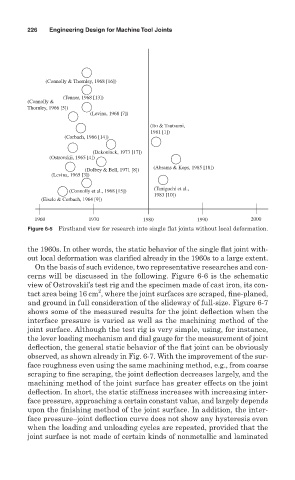
               Figure 6-5 Firsthand view for research into single flat joints without local deformation.


               the 1960s. In other words, the static behavior of the single flat joint with-
               out local deformation was clarified already in the 1960s to a large extent.
                 On the basis of such evidence, two representative researches and con-
               cerns will be discussed in the following. Figure 6-6 is the schematic
               view of Ostrovskii’s test rig and the specimen made of cast iron, its con-
                                  2
               tact area being 16 cm , where the joint surfaces are scraped,  fine-planed,
               and ground in full consideration of the slideway of  full-size. Figure 6-7
               shows some of the measured results for the joint deflection when the
               interface pressure is varied as well as the machining method of the
               joint surface. Although the test rig is very simple, using, for instance,
               the lever loading mechanism and dial gauge for the measurement of joint
               deflection, the general static behavior of the flat joint can be obviously
               observed, as shown already in Fig. 6-7. With the improvement of the sur-
               face roughness even using the same machining method, e.g., from coarse
               scraping to fine scraping, the joint deflection decreases largely, and the
               machining method of the joint surface has greater effects on the joint
               deflection. In short, the static stiffness increases with increasing inter-
               face pressure, approaching a certain constant value, and largely depends
               upon the finishing method of the joint surface. In addition, the inter-
               face pressure–joint deflection curve does not show any hysteresis even
               when the loading and unloading cycles are repeated, provided that the
               joint surface is not made of certain kinds of nonmetallic and laminated

