


Page 195 - Plant design and economics for chemical engineers
P. 195
COST ESTIMATION  169
          80,000  1      I    I   I  I   Ill,,           I    I   11
          60,000
          50,000
          40,000


          10,000
          8.000
           6,000                     I  I  III1              ia,.   lb90
              100      200          500      1,000    2,000       5,000
                             Outside heat-transfer area, sq  ff
                                                                   \
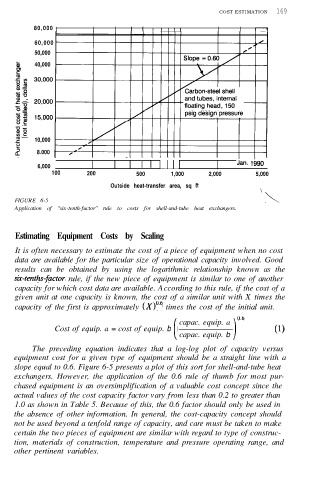
     FIGURE 6-5                                                      \
     Application of “six-tenth-factor” rule to costs for shell-and-tube heat exchangers.


     Estimating Equipment Costs by Scaling
     It is often necessary to estimate the cost of a piece of equipment when no cost
     data are available for the particular size of operational capacity involved. Good
     results can be obtained by using the logarithmic relationship known as the
     six-tenths-factor  rule, if the new piece of equipment is similar to one of another
     capacity for which cost data are available. According to this rule, if the cost of a
     given unit at one capacity is known, the cost of a similar unit with X times the
     capacity of the first is approximately (X)“.6  times the cost of the initial unit.

                                               capac. equip. a O6
               Cost of equip. a = cost of equip. b                     (1)
                                               capac. equip. b
         The preceding equation indicates that a log-log plot of capacity versus
     equipment cost for a given type of equipment should be a straight line with a
     slope equal to 0.6. Figure 6-5 presents a plot of this sort for shell-and-tube heat
     exchangers. However, the application of the 0.6 rule of thumb for most pur-
     chased equipment is an oversimplification of a valuable cost concept since the
     actual values of the cost capacity factor vary from less than 0.2 to greater than
     1.0 as shown in Table 5. Because of this, the 0.6 factor should only be used in
     the absence of other information. In general, the cost-capacity concept should
     not be used beyond a tenfold range of capacity, and care must be taken to make
     certain the two pieces of equipment are similar with regard to type of construc-
     tion, materials of construction, temperature and pressure operating range, and
     other pertinent variables.

