


Page 32 - Robotics Designing the Mechanisms for Automated Machinery
P. 32
1.4 Structure of Automatic Industrial Systems           21


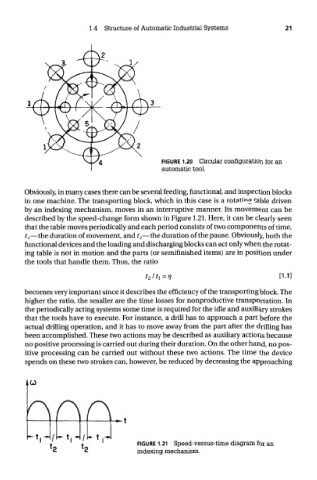
                                                FIGURE 1.20 Circular configuration for an
                                                automatic tool.


        Obviously, in many cases there can be several feeding, functional, and inspection blocks
        in one machine. The transporting block, which in this case is a rotating table driven
        by an indexing mechanism, moves in an interruptive manner. Its movement can be
        described by the speed-change form shown in Figure 1.21. Here, it can be clearly seen
        that the table moves periodically and each period consists of two components of time,
        ?!—the duration of movement, and t 2—the duration of the pause. Obviously, both the
        functional devices and the loading and discharging blocks can act only when the rotat-
        ing table is not in motion and the parts (or semifinished items) are in position under
        the tools that handle them. Thus, the ratio


        becomes very important since it describes the efficiency of the transporting block. The
        higher the ratio, the smaller are the time losses for nonproductive transportation. In
        the periodically acting systems some time is required for the idle and auxiliary strokes
        that the tools have to execute. For instance, a drill has to approach a part before the
        actual drilling operation, and it has to move away from the part after the drilling has
        been accomplished. These two actions may be described as auxiliary actions because
        no positive processing is carried out during their duration. On the other hand, no pos-
        itive processing can be carried out without these two actions. The time the device
        spends on these two strokes can, however, be reduced by decreasing the approaching


                                         FIGURE 1.21 Speed-versus-time diagram for an
                                         indexing mechanism.

