


Page 112 - Sedimentology and Stratigraphy
P. 112
Tectonics and Denudation   99

                       (                                      material from the top results in an isostatic readjust-
                          &                                   ment and the whole crustal mass moving upwards
                                             1

      .        areas of steep relief, and as a mountain belt grows, the
                      &                                       (Fig. 6.13). Rates of denudation tend to be greater in
                      '((                                     steep topography created by tectonic uplift is subject
                          &                                   to large amounts of erosion. Once the tectonic uplift
                                                              ceases, surface processes start to reduce the topogra-
                                                              phy. Through time, denudation followed by isostatic
                                       >
                the base of the root becomes level with the rest of the
                      ,((                                     readjustment would remove mass from the top until
                                                              crust around. In this way, the mountains of an oro-
                                                              genic belt can be completely obliterated as denudation
                                                              reduces the area to normal crustal thickness.
                      =((

                             However, denudation does not occur evenly and it is
                                                              possible to envisage an apparently paradoxical situa-
                                                              tion whereby denudation actually causes uplift. If the
                                                              initial topography created is a large plateau, erosion
                      +((

                                will start by rivers incising into the plateau and remov-
                                                              ing mass from the valleys, but without significant ero-
                                                              sion of the areas between them. The mass of the area
                                                              will be reduced, and so isostatic uplift of the whole
                      <((                                     plateau occurs, including the areas between the rivers
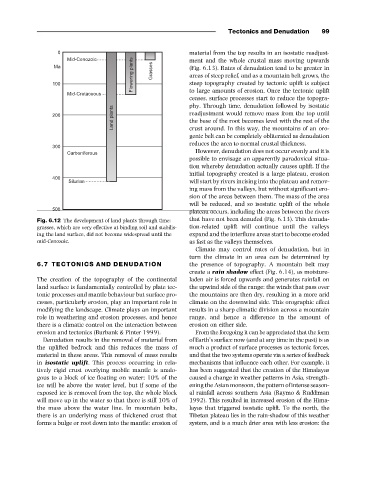
                 Fig. 6.12 The development of land plants through time:  that have not been denuded (Fig. 6.13). This denuda-
                 grasses, which are very effective at binding soil and stabilis-  tion-related uplift will continue until the valleys
                 ing the land surface, did not become widespread until the  expand and the interfluve areas start to become eroded
                 mid-Cenozoic.                                as fast as the valleys themselves.
                                                               Climate may control rates of denudation, but in
                                                              turn the climate in an area can be determined by
                 6.7 TECTONICS AND DENUDATION                 the presence of topography. A mountain belt may
                                                              create a rain shadow effect (Fig. 6.14), as moisture-
                 The creation of the topography of the continental  laden air is forced upwards and generates rainfall on
                 land surface is fundamentally controlled by plate tec-  the upwind side of the range: the winds that pass over
                 tonic processes and mantle behaviour but surface pro-  the mountains are then dry, resulting in a more arid
                 cesses, particularly erosion, play an important role in  climate on the downwind side. This orographic effect
                 modifying the landscape. Climate plays an important  results in a sharp climatic division across a mountain
                 role in weathering and erosion processes, and hence  range, and hence a difference in the amount of
                 there is a climatic control on the interaction between  erosion on either side.
                 erosion and tectonics (Burbank & Pinter 1999).  From the foregoing it can be appreciated that the form
                   Denudation results in the removal of material from  of Earth’s surface now (and at any time in the past) is as
                 the uplifted bedrock and this reduces the mass of  much a product of surface processes as tectonic forces,
                 material in these areas. This removal of mass results  and that the two systems operate via a series of feedback
                 in isostatic uplift. This process occurring in rela-  mechanisms that influence each other. For example, it
                 tively rigid crust overlying mobile mantle is analo-  has been suggested that the creation of the Himalayas
                 gous to a block of ice floating on water: 10% of the  caused a change in weather patterns in Asia, strength-
                 ice will be above the water level, but if some of the  ening the Asian monsoon, the pattern of intense season-
                 exposed ice is removed from the top, the whole block  al rainfall across southern Asia (Raymo & Ruddiman
                 will move up in the water so that there is still 10% of  1992). This resulted in increased erosion of the Hima-
                 the mass above the water line. In mountain belts,  layas that triggered isostatic uplift. To the north, the
                 there is an underlying mass of thickened crust that  Tibetan plateau lies in the rain-shadow of this weather
                 forms a bulge or root down into the mantle: erosion of  system, and is a much drier area with less erosion: the

