


Page 117 - Sedimentology and Stratigraphy
P. 117
104    Glacial Environments


                                                              7.2 GLACIAL ICE
                                                              Ice is a solid, but under pressure it will behave in a
                                                              ductile manner and flow by moving away from the
                                                              point of higher pressure. Pressure is provided by the
                                                              weight of ice above any particular point and the ice
                                                              will flow slowly as an extremely viscous fluid (4.2.1).
                                                              Glacier ice moves at rates which vary from as little as
                                                              a few metres per year to hundreds of metres a year.
                                                              Different parts of a body of ice move at different rates
                                                              because of different pressure gradients, resulting in
                                                              movement by internal deformation within the ice
                                                              mass. Typically the flow rate is greatest at the surface
                                                              of the ice decreasing downwards towards the base of
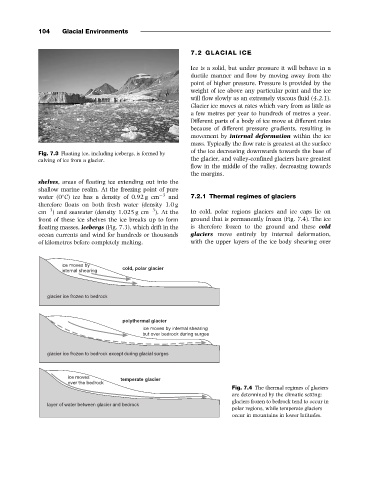
                  Fig. 7.3 Floating ice, including icebergs, is formed by
                  calving of ice from a glacier.              the glacier, and valley-confined glaciers have greatest
                                                              flow in the middle of the valley, decreasing towards
                                                              the margins.
                  shelves, areas of floating ice extending out into the
                  shallow marine realm. At the freezing point of pure
                  water (08C) ice has a density of 0.92 g cm  3  and  7.2.1 Thermal regimes of glaciers
                  therefore floats on both fresh water (density 1.0 g
                  cm  3 ) and seawater (density 1.025 g cm  3 ). At the  In cold, polar regions glaciers and ice caps lie on
                  front of these ice shelves the ice breaks up to form  ground that is permanently frozen (Fig. 7.4). The ice
                  floating masses, icebergs (Fig. 7.3), which drift in the  is therefore frozen to the ground and these cold
                  ocean currents and wind for hundreds or thousands  glaciers move entirely by internal deformation,
                  of kilometres before completely melting.    with the upper layers of the ice body shearing over


                                                                          Fig. 7.4 The thermal regimes of glaciers
                                                                          are determined by the climatic setting:


                             glaciers frozen to bedrock tend to occur in
                                                                          polar regions, while temperate glaciers
                                                                          occur in mountains in lower latitudes.

