


Page 121 - Sedimentology and Stratigraphy
P. 121
108    Glacial Environments


                  characteristics of these features provide information  graphic record in the long term. This is because they
                  about glacial processes in the past few tens of thou-  mainly occur in areas that are only regions of deposi-
                  sands of years of Earth history and provide a basis  tion as a consequence of the glacial processes: many
                  for understanding the origins of the landscapes  of the modern glacial landscapes are undergoing ero-
                  around us. However, most continental glacial deposits  sion and over time the continental glacial deposits will
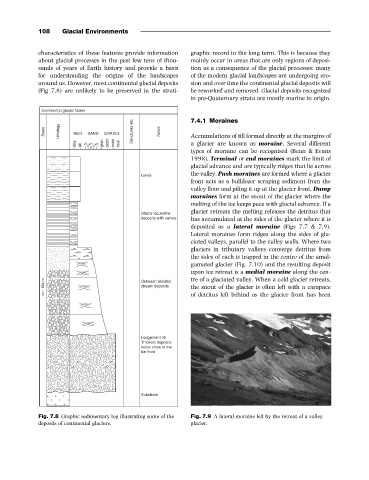
                  (Fig 7.8) are unlikely to be preserved in the strati-  be reworked and removed. Glacial deposits recognized
                                                              in pre-Quaternary strata are mostly marine in origin.
                   Continental glacial facies                 7.4.1 Moraines

                    Scale  Lithology  MUD  SAND  GRAVEL  Structures etc  Notes  Accumulations of till formed directly at the margins of

                             clay  silt  vf m vc  gran  pebb  cobb  boul  a glacier are known as moraine. Several different
                                f
                                  c
                                                              types of moraine can be recognised (Benn & Evans
                                                              1998). Terminal or end moraines mark the limit of
                                                              glacial advance and are typically ridges that lie across
                                                              the valley. Push moraines are formed where a glacier
                                                Loess
                                                              front acts as a bulldozer scraping sediment from the
                                                              valley floor and piling it up at the glacier front. Dump
                                                              moraines form at the snout of the glacier where the
                                                              melting of the ice keeps pace with glacial advance. If a
                                                              glacier retreats the melting releases the detritus that
                                                Glacio-lacustrine
                                                deposits with varves  has accumulated at the sides of the glacier where it is
                                                              deposited as a lateral moraine (Figs 7.7 & 7.9).
                                                              Lateral moraines form ridges along the sides of gla-
                                                              ciated valleys, parallel to the valley walls. Where two
                                                              glaciers in tributary valleys converge detritus from
                                                              the sides of each is trapped in the centre of the amal-
                                                              gamated glacier (Fig. 7.10) and the resulting deposit
                                                              upon ice retreat is a medial moraine along the cen-
                    m - 10s m                   Outwash braided  tre of a glaciated valley. When a cold glacier retreats,
                                                stream deposits
                                                              the snout of the glacier is often left with a carapace
                                                              of detritus left behind as the glacier front has been


                                                Lodgement till.
                                                Thickest deposits
                                                occur close to the
                                                ice front


                                                Substrate


                  Fig. 7.8 Graphic sedimentary log illustrating some of the  Fig. 7.9 A lateral moraine left by the retreat of a valley
                  deposits of continental glaciers.           glacier.

