


Page 150 - Sedimentology and Stratigraphy
P. 150
River Forms   137


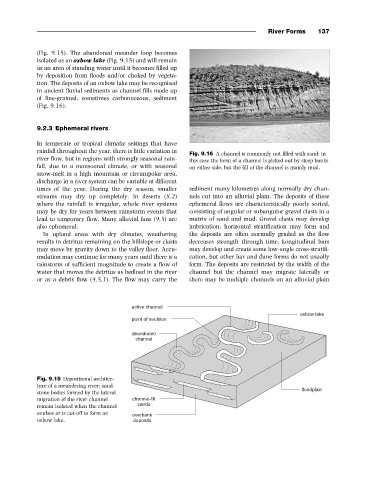
                 (Fig. 9.15). The abandoned meander loop becomes
                 isolated as an oxbow lake (Fig. 9.15) and will remain
                 as an area of standing water until it becomes filled up
                 by deposition from floods and/or choked by vegeta-
                 tion. The deposits of an oxbow lake may be recognised
                 in ancient fluvial sediments as channel fills made up
                 of fine-grained, sometimes carbonaceous, sediment
                 (Fig. 9.16).


                 9.2.3 Ephemeral rivers

                 In temperate or tropical climatic settings that have
                 rainfall throughout the year, there is little variation in  Fig. 9.16 A channel is commonly not filled with sand: in
                 river flow, but in regions with strongly seasonal rain-  this case the form of a channel is picked out by steep banks
                 fall, due to a monsoonal climate, or with seasonal  on either side, but the fill of the channel is mainly mud.
                 snow-melt in a high mountain or circumpolar area,
                 discharge in a river system can be variable at different
                 times of the year. During the dry season, smaller  sediment many kilometres along normally dry chan-
                 streams may dry up completely. In deserts (8.2)  nels cut into an alluvial plain. The deposits of these
                 where the rainfall is irregular, whole river systems  ephemeral flows are characteristically poorly sorted,
                 may be dry for years between rainstorm events that  consisting of angular or subangular gravel clasts in a
                 lead to temporary flow. Many alluvial fans (9.5) are  matrix of sand and mud. Gravel clasts may develop
                 also ephemeral.                              imbrication, horizontal stratification may form and
                   In upland areas with dry climates, weathering  the deposits are often normally graded as the flow
                 results in detritus remaining on the hillslope or clasts  decreases strength through time. Longitudinal bars
                 may move by gravity down to the valley floor. Accu-  may develop and create some low-angle cross-stratifi-
                 mulation may continue for many years until there is a  cation, but other bar and dune forms do not usually
                 rainstorm of sufficient magnitude to create a flow of  form. The deposits are restricted by the width of the
                 water that moves the detritus as bedload in the river  channel but the channel may migrate laterally or
                 or as a debris flow (4.5.1). The flow may carry the  there may be multiple channels on an alluvial plain


                                                                                               !


                 Fig. 9.15 Depositional architec-
                 ture of a meandering river: sand-
                 stone bodies formed by the lateral
                 migration of the river channel
                 remain isolated when the channel
                 avulses or is cut-off to form an
                 oxbow lake.

