


Page 209 - Sedimentology and Stratigraphy
P. 209
196    Deltas


      	  #


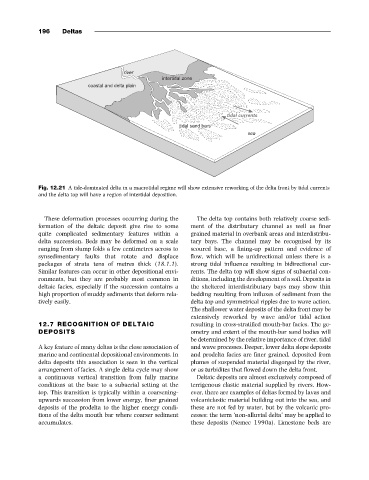
                  Fig. 12.21 A tide-dominated delta in a macrotidal regime will show extensive reworking of the delta front by tidal currents
                  and the delta top will have a region of intertidal deposition.


                    These deformation processes occurring during the  The delta top contains both relatively coarse sedi-
                  formation of the deltaic deposit give rise to some  ment of the distributary channel as well as finer
                  quite complicated sedimentary features within a  grained material in overbank areas and interdistribu-
                  delta succession. Beds may be deformed on a scale  tary bays. The channel may be recognised by its
                  ranging from slump folds a few centimetres across to  scoured base, a fining-up pattern and evidence of
                  synsedimentary faults that rotate and displace  flow, which will be unidirectional unless there is a
                  packages of strata tens of metres thick (18.1.1).  strong tidal influence resulting in bidirectional cur-
                  Similar features can occur in other depositional envi-  rents. The delta top will show signs of subaerial con-
                  ronments, but they are probably most common in  ditions, including the development of a soil. Deposits in
                  deltaic facies, especially if the succession contains a  the sheltered interdistributary bays may show thin
                  high proportion of muddy sediments that deform rela-  bedding resulting from influxes of sediment from the
                  tively easily.                              delta top and symmetrical ripples due to wave action.
                                                              The shallower water deposits of the delta front may be
                                                              extensively reworked by wave and/or tidal action
                  12.7 RECOGNITION OF DELTAIC                 resulting in cross-stratified mouth-bar facies. The ge-
                  DEPOSITS                                    ometry and extent of the mouth-bar sand bodies will
                                                              be determined by the relative importance of river, tidal
                  A key feature of many deltas is the close association of  and wave processes. Deeper, lower delta slope deposits
                  marine and continental depositional environments. In  and prodelta facies are finer grained, deposited from
                  delta deposits this association is seen in the vertical  plumes of suspended material disgorged by the river,
                  arrangement of facies. A single delta cycle may show  or as turbidites that flowed down the delta front.
                  a continuous vertical transition from fully marine  Deltaic deposits are almost exclusively composed of
                  conditions at the base to a subaerial setting at the  terrigenous clastic material supplied by rivers. How-
                  top. This transition is typically within a coarsening-  ever, there are examples of deltas formed by lavas and
                  upwards succession from lower energy, finer grained  volcaniclastic material building out into the sea, and
                  deposits of the prodelta to the higher energy condi-  these are not fed by water, but by the volcanic pro-
                  tions of the delta mouth bar where coarser sediment  cesses: the term ‘non-alluvial delta’ may be applied to
                  accumulates.                                these deposits (Nemec 1990a). Limestone beds are

