


Page 232 - Sedimentology and Stratigraphy
P. 232
Storm-dominated Shallow Clastic Seas  219


                                                              14.2.2 Characteristics of a storm-dominated
                                                              shallow-marine succession

                                                              If there is a constant sediment supply to the shelf,
                                                              continued deposition builds up the layers on the sea
                                                              bed and the water becomes shallower. Shelf areas that
                                                              were formerly below storm wave base experience the
                                                              effects of storms and become part of the offshore tran-
                                                              sition zone. Similarly addition of sediment to the sea
                                                              floor in the offshore transition zone brings the sea
                                                              bed up into the shoreface zone above fair-weather
                                                              wave base and a vertical succession of facies that
                                                              progressively  shallow  upwards  is  constructed
                                                              (Figs 14.5 & 14.6) (Walker & Plint 1992). The off-
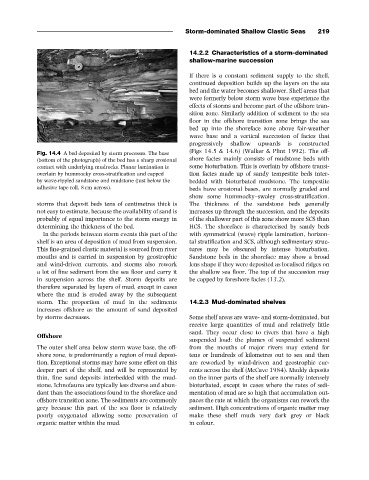
                 Fig. 14.4 A bed deposited by storm processes. The base
                 (bottom of the photograph) of the bed has a sharp erosional  shore facies mainly consists of mudstone beds with
                 contact with underlying mudrocks. Planar lamination is  some bioturbation. This is overlain by offshore transi-
                 overlain by hummocky cross-stratification and capped  tion facies made up of sandy tempestite beds inter-
                 by wave-rippled sandstone and mudstone (just below the  bedded with bioturbated mudstone. The tempestite
                 adhesive tape roll, 8 cm across).            beds have erosional bases, are normally graded and
                                                              show some hummocky–swaley cross-stratification.
                 storms that deposit beds tens of centimetres thick is  The thickness of the sandstone beds generally
                 not easy to estimate, because the availability of sand is  increases up through the succession, and the deposits
                 probably of equal importance to the storm energy in  of the shallower part of this zone show more SCS than
                 determining the thickness of the bed.        HCS. The shoreface is characterised by sandy beds
                   In the periods between storm events this part of the  with symmetrical (wave) ripple lamination, horizon-
                 shelf is an area of deposition of mud from suspension.  tal stratification and SCS, although sedimentary struc-
                 This fine-grained clastic material is sourced from river  tures may be obscured by intense bioturbation.
                 mouths and is carried in suspension by geostrophic  Sandstone beds in the shoreface may show a broad
                 and wind-driven currents, and storms also rework  lens shape if they were deposited as localised ridges on
                 a lot of fine sediment from the sea floor and carry it  the shallow sea floor. The top of the succession may
                 in suspension across the shelf. Storm deposits are  be capped by foreshore facies (13.2).
                 therefore separated by layers of mud, except in cases
                 where the mud is eroded away by the subsequent
                 storm. The proportion of mud in the sediments  14.2.3 Mud-dominated shelves
                 increases offshore as the amount of sand deposited
                 by storms decreases.                         Some shelf areas are wave- and storm-dominated, but
                                                              receive large quantities of mud and relatively little
                                                              sand. They occur close to rivers that have a high
                 Offshore
                                                              suspended load: the plumes of suspended sediment
                 The outer shelf area below storm wave base, the off-  from the mouths of major rivers may extend for
                 shore zone, is predominantly a region of mud deposi-  tens or hundreds of kilometres out to sea and then
                 tion. Exceptional storms may have some effect on this  are reworked by wind-driven and geostrophic cur-
                 deeper part of the shelf, and will be represented by  rents across the shelf (McCave 1984). Muddy deposits
                 thin, fine sand deposits interbedded with the mud-  on the inner parts of the shelf are normally intensely
                 stone. Ichnofauna are typically less diverse and abun-  bioturbated, except in cases where the rates of sedi-
                 dant than the associations found in the shoreface and  mentation of mud are so high that accumulation out-
                 offshore transition zone. The sediments are commonly  paces the rate at which the organisms can rework the
                 grey because this part of the sea floor is relatively  sediment. High concentrations of organic matter may
                 poorly oxygenated allowing some preservation of  make these shelf muds very dark grey or black
                 organic matter within the mud.               in colour.

