


Page 233 - Sedimentology and Stratigraphy
P. 233
220    Shallow Sandy Seas


                       Storm-dominated shelf                  14.3 TIDE-DOMINATED CLASTIC
                                                              SHALLOW SEAS
                        Scale  Lithology  MUD  SAND GRAVEL  Structures etc  Notes
                               clay  silt  vf m vc  gran  pebb  cobb  boul  14.3.1 Deposition on tide-dominated
                                 f
                                  c
                                                              shelves
                                              Foreshore: stratified
                                              sands
                                                              Offshore sand ridges
                                                              Near shorelines that experience strong tidal currents
                                                              large sand ridges (14.2.1) are found on modern
                                                              shelves. The ridges form parallel to the shoreline in
                                                              water depths of up to 50 m and may be tens of metres
                                              Shoreface: wave
                                              rippled and swaley  high, in places rising almost to sea level (Fig. 14.7).
                                              cross-stratified
                                              (SCS) sands     They are typically a few kilometres wide, similar dis-
                        10s metres                            tances apart and extend for tens of kilometres as
                                                              straight or gently curving features, elongated parallel
                                                              to the tidal current. Between the sandy ridges there
                                                              may be thin layers of gravel on the sea floor, deposited
                                                              during an earlier, probably shallower phase of sedi-
                                                              mentation on the shelf, and left behind as a lag as
                                                              sand has been winnowed away by the currents (Plint
                                                              1988; Hart & Plint 1995). The sands are moderately
                                                              well sorted, medium grained but the deposits may
                                             Offshore transition:  include some mud occurring as clay laminae depos-
                                             hummocky cross-
                                             stratified (HCS)  ited during slack phases of the tidal flow. Internal
                                             sands interbedded
                                             with bioturbated mud  sedimentary structures are cross-lamination and
                                                              cross-bedding generated by the migration of ripples
                                                              and subaqueous dune bedforms over the surface of
                                                              the ridges. The resulting sandstone body preserved in
                                                              the stratigraphic record is likely to have a basal lag
                                                              and consist of stacks of cross-bedded and cross-
                                                              laminated sandstone up to 10 m thick, or more: the
                                                              primary sedimentary structures may be wholly or
                                                              partly destroyed by bioturbation.


                                                              Tidal sandwaves and sand ribbons
                                                              Currents generated by tides influence large areas of
                                                              shelves and epicontinental seas. These tidal currents
                                                              affect the sea bed tens of metres below sea level and
                                                              are strong enough to move large quantities of sand
                                                              in shallow marine environments. The effects of waves
                                              Offshore:
                                              bioturbated mud  and storms are largely removed by tidal currents
                                                              reworking the material in macrotidal regimes and
                                                              only the tidal signature is left in the stratigraphic
                                                              record. In seas with moderate tidal effects the influence
                                                              of tides is seen in shallower water, but storm deposits
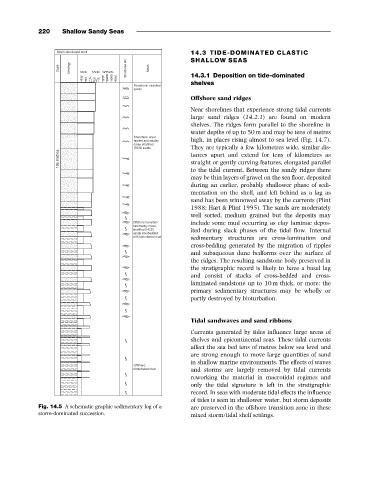
                  Fig. 14.5 A schematic graphic sedimentary log of a  are preserved in the offshore transition zone in these
                  storm-dominated succession.                 mixed storm/tidal shelf settings.

