


Page 234 - Sedimentology and Stratigraphy
P. 234
Tide-dominated Clastic Shallow Seas  221


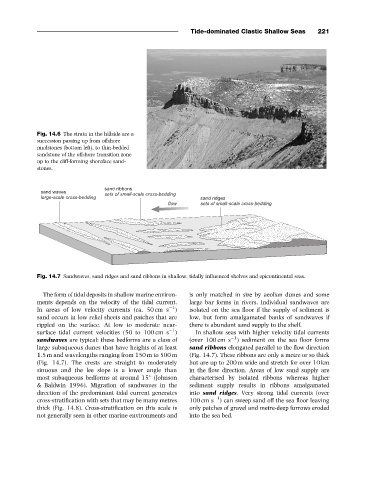
                 Fig. 14.6 The strata in the hillside are a
                 succession passing up from offshore
                 mudstones (bottom left), to thin-bedded
                 sandstone of the offshore transition zone
                 up to the cliff-forming shoreface sand-
                 stones.


                 Fig. 14.7 Sandwaves, sand ridges and sand ribbons in shallow, tidally influenced shelves and epicontinental seas.


                   The form of tidal deposits in shallow marine environ-  is only matched in size by aeolian dunes and some
                 ments depends on the velocity of the tidal current.  large bar forms in rivers. Individual sandwaves are
                 In areas of low velocity currents (ca. 50 cm s  1 )  isolated on the sea floor if the supply of sediment is
                 sand occurs in low relief sheets and patches that are  low, but form amalgamated banks of sandwaves if
                 rippled on the surface. At low to moderate near-  there is abundant sand supply to the shelf.
                 surface tidal current velocities (50 to 100 cm s  1 )  In shallow seas with higher velocity tidal currents
                 sandwaves are typical: these bedforms are a class of  (over 100 cm s  1 ) sediment on the sea floor forms
                 large subaqueous dunes that have heights of at least  sand ribbons elongated parallel to the flow direction
                 1.5 m and wavelengths ranging from 150 m to 500 m  (Fig. 14.7). These ribbons are only a metre or so thick
                 (Fig. 14.7). The crests are straight to moderately  but are up to 200 m wide and stretch for over 10 km
                 sinuous and the lee slope is a lower angle than  in the flow direction. Areas of low sand supply are
                 most subaqueous bedforms at around 158 (Johnson  characterised by isolated ribbons whereas higher
                 & Baldwin 1996). Migration of sandwaves in the  sediment supply results in ribbons amalgamated
                 direction of the predominant tidal current generates  into sand ridges. Very strong tidal currents (over
                 cross-stratification with sets that may be many metres  100 cm s  1 ) can sweep sand off the sea floor leaving
                 thick (Fig. 14.8). Cross-stratification on this scale is  only patches of gravel and metre-deep furrows eroded
                 not generally seen in other marine environments and  into the sea bed.

