


Page 248 - Sedimentology and Stratigraphy
P. 248
Shallow Marine Carbonate Environments   235


                        	 		                                                        !


                                                                                #

                                  #


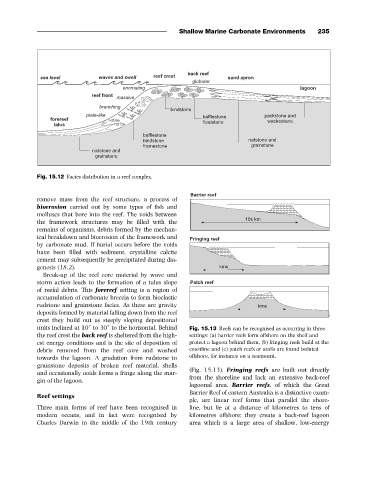
                 Fig. 15.12 Facies distribution in a reef complex.


                 remove mass from the reef structure, a process of
                 bioerosion carried out by some types of fish and
                 molluscs that bore into the reef. The voids between
                 the framework structures may be filled with the
                 remains of organisms, debris formed by the mechan-
                 ical breakdown and bioerosion of the framework and  !
                 by carbonate mud. If burial occurs before the voids
                 have been filled with sediment, crystalline calcite
                 cement may subsequently be precipitated during dia-
                 genesis (18.2).
                   Break-up of the reef core material by wave and
                 storm action leads to the formation of a talus slope
                 of reefal debris. This forereef setting is a region of
                 accumulation of carbonate breccia to form bioclastic
                 rudstone and grainstone facies. As these are gravity
                 deposits formed by material falling down from the reef
                 crest they build out as steeply sloping depositional
                 units inclined at 10˚ to 30˚ to the horizontal. Behind  Fig. 15.13 Reefs can be recognised as occurring in three
                 the reef crest the back reef is sheltered from the high-  settings: (a) barrier reefs form offshore on the shelf and
                 est energy conditions and is the site of deposition of  protect a lagoon behind them, (b) fringing reefs build at the
                 debris removed from the reef core and washed  coastline and (c) patch reefs or atolls are found isolated
                 towards the lagoon. A gradation from rudstone to  offshore, for instance on a seamount.
                 grainstone deposits of broken reef material, shells
                 and occasionally ooids forms a fringe along the mar-  (Fig. 15.13). Fringing reefs are built out directly
                 gin of the lagoon.                           from the shoreline and lack an extensive back-reef
                                                              lagoonal area. Barrier reefs, of which the Great
                                                              Barrier Reef of eastern Australia is a distinctive exam-
                 Reef settings
                                                              ple, are linear reef forms that parallel the shore-
                 Three main forms of reef have been recognised in  line, but lie at a distance of kilometres to tens of
                 modern oceans, and in fact were recognised by  kilometres offshore: they create a back-reef lagoon
                 Charles Darwin in the middle of the 19th century  area which is a large area of shallow, low-energy

