


Page 245 - Sedimentology and Stratigraphy
P. 245
232    Shallow Marine Carbonate and Evaporite Environments


                                              #
                                             $                  %


                                                                              #
                                                        !


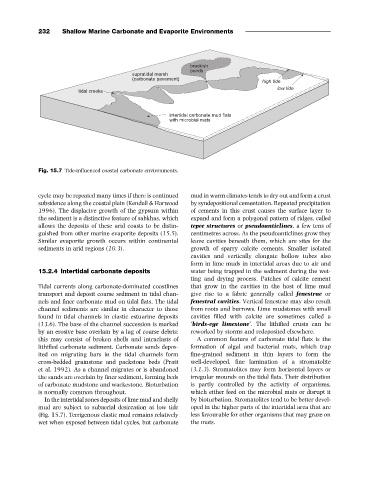
                  Fig. 15.7 Tide-influenced coastal carbonate environments.


                  cycle may be repeated many times if there is continued  mud in warm climates tends to dry out and form a crust
                  subsidence along the coastal plain (Kendall & Harwood  by syndepositional cementation. Repeated precipitation
                  1996). The displacive growth of the gypsum within  of cements in this crust causes the surface layer to
                  the sediment is a distinctive feature of sabkhas, which  expand and form a polygonal pattern of ridges, called
                  allows the deposits of these arid coasts to be distin-  tepee structures or pseudoanticlines, a few tens of
                  guished from other marine evaporite deposits (15.5).  centimetres across. As the pseudoanticlines grow they
                  Similar evaporite growth occurs within continental  leave cavities beneath them, which are sites for the
                  sediments in arid regions (10.3).           growth of sparry calcite cements. Smaller isolated
                                                              cavities and vertically elongate hollow tubes also
                                                              form in lime muds in intertidal areas due to air and
                  15.2.4 Intertidal carbonate deposits        water being trapped in the sediment during the wet-
                                                              ting and drying process. Patches of calcite cement
                  Tidal currents along carbonate-dominated coastlines  that grow in the cavities in the host of lime mud
                  transport and deposit coarse sediment in tidal chan-  give rise to a fabric generally called fenestrae or
                  nels and finer carbonate mud on tidal flats. The tidal  fenestral cavities. Vertical fenestrae may also result
                  channel sediments are similar in character to those  from roots and burrows. Lime mudstones with small
                  found in tidal channels in clastic estuarine deposits  cavities filled with calcite are sometimes called a
                  (13.6). The base of the channel succession is marked  ‘birds-eye limestone’. The lithified crusts can be
                  by an erosive base overlain by a lag of coarse debris:  reworked by storms and redeposited elsewhere.
                  this may consist of broken shells and intraclasts of  A common feature of carbonate tidal flats is the
                  lithified carbonate sediment. Carbonate sands depos-  formation of algal and bacterial mats, which trap
                  ited on migrating bars in the tidal channels form  fine-grained sediment in thin layers to form the
                  cross-bedded grainstone and packstone beds (Pratt  well-developed, fine lamination of a stromatolite
                  et al. 1992). As a channel migrates or is abandoned  (3.1.3). Stromatolites may form horizontal layers or
                  the sands are overlain by finer sediment, forming beds  irregular mounds on the tidal flats. Their distribution
                  of carbonate mudstone and wackestone. Bioturbation  is partly controlled by the activity of organisms,
                  is normally common throughout.              which either feed on the microbial mats or disrupt it
                    In the intertidal zones deposits of lime mud and shelly  by bioturbation. Stromatolites tend to be better devel-
                  mud are subject to subaerial desiccation at low tide  oped in the higher parts of the intertidal area that are
                  (Fig. 15.7). Terrigenous clastic mud remains relatively  less favourable for other organisms that may graze on
                  wet when exposed between tidal cycles, but carbonate  the mats.

