


Page 279 - Semiconductor Manufacturing Handbook
P. 279
Geng(SMH)_CH19.qxd  04/04/2005  20:00  Page 19.6


                                                INSPECTION, MEASUREMENT, AND TEST

                   19.6  FINAL MANUFACTURING


                                        Evaluation and    Time-to-  Time-to-  Time-to-profit  Maturity in
                                         purchase     market     volume                  the market
                                          Needs       Be ahead of     Ramp     Maximize
                                           assessment     market window     production     profitability
                                          Requirement     Characterize    Automated test     Minimize COT
                                           defined      device      cell      Overall equip-
                                          Test system     Win design-ins     Correlation to      ment efficiency
                                          strategy      to application      standard     Best business
                                          Solution                Improve     model
                                     Volume      definition        repeatability
                                          Planning
                                                                  Reduce
                                          Development              guardband


                                          Test system
                                           delivery

                                                                  Time
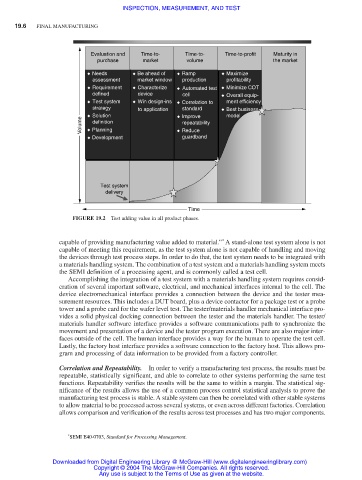
                                   FIGURE 19.2  Test adding value in all product phases.


                                                                           *
                               capable of providing manufacturing value added to material.” A stand-alone test system alone is not
                               capable of meeting this requirement, as the test system alone is not capable of handling and moving
                               the devices through test process steps. In order to do that, the test system needs to be integrated with
                               a materials handling system. The combination of a test system and a materials handling system meets
                               the SEMI definition of a processing agent, and is commonly called a test cell.
                                 Accomplishing the integration of a test system with a materials handling system requires consid-
                               eration of several important software, electrical, and mechanical interfaces internal to the cell. The
                               device electromechanical interface provides a connection between the device and the tester mea-
                               surement resources. This includes a DUT board, plus a device contactor for a package test or a probe
                               tower and a probe card for the wafer level test. The tester/materials handler mechanical interface pro-
                               vides a solid physical docking connection between the tester and the materials handler. The tester/
                               materials handler software interface provides a software communications path to synchronize the
                               movement and presentation of a device and the tester program execution. There are also major inter-
                               faces outside of the cell. The human interface provides a way for the human to operate the test cell.
                               Lastly, the factory host interface provides a software connection to the factory host. This allows pro-
                               gram and processing of data information to be provided from a factory controller.
                               Correlation and Repeatability.  In order to verify a manufacturing test process, the results must be
                               repeatable, statistically significant, and able to correlate to other systems performing the same test
                               functions. Repeatability verifies the results will be the same to within a margin. The statistical sig-
                               nificance of the results allows the use of a common process control statistical analysis to prove the
                               manufacturing test process is stable. A stable system can then be correlated with other stable systems
                               to allow material to be processed across several systems, or even across different factories. Correlation
                               allows comparison and verification of the results across test processes and has two major components.


                                 *
                                  SEMI E40-0703, Standard for Processing Management.

                             Downloaded from Digital Engineering Library @ McGraw-Hill (www.digitalengineeringlibrary.com)
                                        Copyright © 2004 The McGraw-Hill Companies. All rights reserved.
                                          Any use is subject to the Terms of Use as given at the website.

