


Page 174 - Materials Chemistry, Second Edition
P. 174
Ch005-P373623.qxd  3/22/07  5:34 PM  Page 153
                   1,000         Sustainability of Municipal Solid Waste Management  153
                    900
                    800
                    700
                  Million Tonnes  600
                    500
                    400
                    300
                    200
                    100
                      0
                          1995     2010      2020           1995      2010     2020
                                   OECD                            Non-OECD

                                   Landfill  Incineration   Recycling   Other
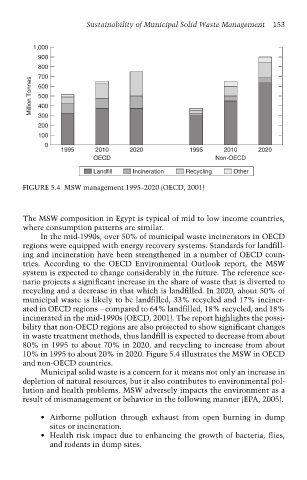
                FIGURE 5.4 MSW management 1995–2020 (OECD, 2001)


                The MSW composition in Egypt is typical of mid to low income countries,
                where consumption patterns are similar.
                     In the mid-1990s, over 50% of municipal waste incinerators in OECD
                regions were equipped with energy recovery systems. Standards for landfill-
                ing and incineration have been strengthened in a number of OECD coun-
                tries. According to the OECD Environmental Outlook report, the MSW
                system is expected to change considerably in the future. The reference sce-
                nario projects a significant increase in the share of waste that is diverted to
                recycling and a decrease in that which is landfilled. In 2020, about 50% of
                municipal waste is likely to be landfilled, 33% recycled and 17% inciner-
                ated in OECD regions – compared to 64% landfilled, 18% recycled, and 18%
                incinerated in the mid-1990s (OECD, 2001). The report highlights the possi-
                bility that non-OECD regions are also projected to show significant changes
                in waste treatment methods, thus landfill is expected to decrease from about
                80% in 1995 to about 70% in 2020, and recycling to increase from about
                10% in 1995 to about 20% in 2020. Figure 5.4 illustrates the MSW in OECD
                and non-OECD countries.
                     Municipal solid waste is a concern for it means not only an increase in
                depletion of natural resources, but it also contributes to environmental pol-
                lution and health problems. MSW adversely impacts the environment as a
                result of mismanagement or behavior in the following manner (EPA, 2005).

                     • Airborne pollution through exhaust from open burning in dump
                       sites or incineration.
                     • Health risk impact due to enhancing the growth of bacteria, flies,
                       and rodents in dump sites.

