


Page 176 - Materials Chemistry, Second Edition
P. 176
Ch005-P373623.qxd  3/22/07  5:34 PM  Page 155
                                 Sustainability of Municipal Solid Waste Management


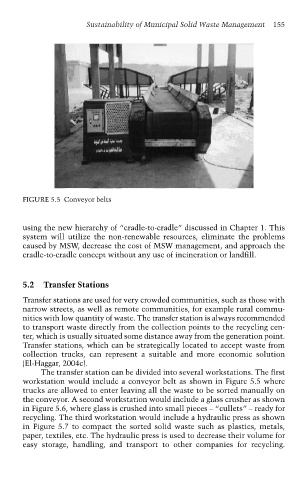
                FIGURE 5.5 Conveyor belts                                          155


                using the new hierarchy of “cradle-to-cradle” discussed in Chapter 1. This
                system will utilize the non-renewable resources, eliminate the problems
                caused by MSW, decrease the cost of MSW management, and approach the
                cradle-to-cradle concept without any use of incineration or landfill.


                5.2   Transfer Stations

                Transfer stations are used for very crowded communities, such as those with
                narrow streets, as well as remote communities, for example rural commu-
                nities with low quantity of waste. The transfer station is always recommended
                to transport waste directly from the collection points to the recycling cen-
                ter, which is usually situated some distance away from the generation point.
                Transfer stations, which can be strategically located to accept waste from
                collection trucks, can represent a suitable and more economic solution
                (El-Haggar, 2004c).
                     The transfer station can be divided into several workstations. The first
                workstation would include a conveyor belt as shown in Figure 5.5 where
                trucks are allowed to enter leaving all the waste to be sorted manually on
                the conveyor. A second workstation would include a glass crusher as shown
                in Figure 5.6, where glass is crushed into small pieces – “cullets” – ready for
                recycling. The third workstation would include a hydraulic press as shown
                in Figure 5.7 to compact the sorted solid waste such as plastics, metals,
                paper, textiles, etc. The hydraulic press is used to decrease their volume for
                easy storage, handling, and transport to other companies for recycling.

