


Page 398 -
P. 398
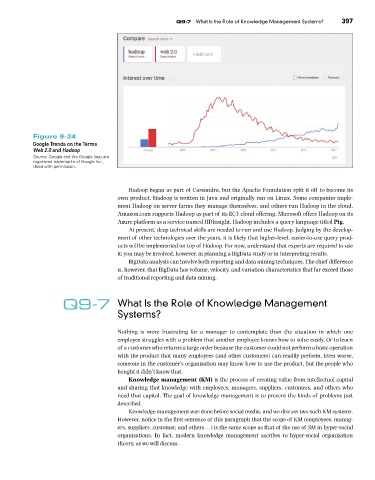
Figure 9-24                                   Q9-7  What Is the Role of Knowledge Management Systems?   397
                    Google Trends on the Terms
                    Web 2.0 and Hadoop
                    Source: Google and the Google logo are
                    registered trademarks of Google Inc.,
                    Used with permission.


                                                   Hadoop began as part of Cassandra, but the Apache Foundation split it off to become its
                                               own product. Hadoop is written in Java and originally ran on Linux. Some companies imple-
                                               ment Hadoop on server farms they manage themselves, and others run Hadoop in the cloud.
                                               Amazon.com supports Hadoop as part of its EC3 cloud offering. Microsoft offers Hadoop on its
                                               Azure  platform as a service named HDInsight. Hadoop includes a query language titled Pig.
                                                   At present, deep technical skills are needed to run and use Hadoop. Judging by the develop-
                                               ment of other technologies over the years, it is likely that higher-level, easier-to-use query prod-
                                               ucts will be implemented on top of Hadoop. For now, understand that experts are required to use
                                               it; you may be involved, however, in planning a BigData study or in interpreting results.
                                                   BigData analysis can involve both reporting and data mining techniques. The chief difference
                                               is, however, that BigData has volume, velocity, and variation characteristics that far exceed those
                                               of traditional reporting and data mining.


                             Q9-7              What Is the Role of Knowledge Management

                                               Systems?


                                               Nothing is more frustrating for a manager  to contemplate  than  the situation in  which one
                                               employee struggles with a problem that another employee knows how to solve easily. Or to learn
                                               of a customer who returns a large order because the customer could not perform a basic operation
                                               with the product that many employees (and other customers) can readily perform. Even worse,
                                               someone in the customer’s organization may know how to use the product, but the people who
                                               bought it didn’t know that.
                                                   Knowledge management (KM) is the process of creating value from intellectual capital
                                               and sharing that knowledge with employees, managers, suppliers, customers, and others who
                                               need that capital. The goal of knowledge management is to prevent the kinds of problems just
                                               described.
                                                   Knowledge management was done before social media, and we discuss two such KM systems.
                                               However, notice in the first sentence of this paragraph that the scope of KM (employees, manag-
                                               ers, suppliers, customer, and others. . . ) is the same scope as that of the use of SM in hyper-social
                                               organizations. In fact, modern  knowledge management ascribes  to  hyper-social organization
                                               theory, as we will discuss.

