


Page 114 - Volcanic Textures A Guide To The Interpretation of Textures In Volcanic Rocks
P. 114
1981). Moderate-grade pyroclastic flow  deposits  have   low-grade pyroclastic  flow  deposits are entirely non-
               welded, partially welded and non-welded zones,  and   welded.


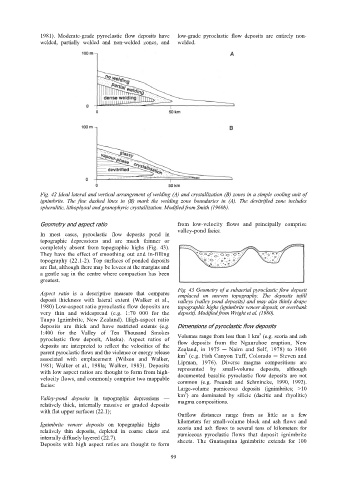
               Fig. 42 Ideal lateral and vertical arrangement of welding (A) and crystallization (B) zones in a simple cooling unit of
               ignimbrite. The fine dashed  lines  in (B) mark the  welding zone boundaries  in (A). The devitrified zone includes
               spherulitic, lithophysal and granophyric crystallization. Modified from Smith (1960b).

               Geometry and aspect ratio                       from  low-velocity flows  and principally  comprise
                                                               valley-pond facies.
               In most cases, pyroclastic flow deposits pond in
               topographic  depressions and are  much thinner or
               completely  absent  from topographic highs (Fig.  43).
               They  have the effect  of smoothing  out  and  in-filling
               topography (22.1-2). Top surfaces of ponded deposits
               are flat, although there may be levees at the margins and
               a gentle sag in the centre where compaction has been
               greatest.
                                                               Fig. 43 Geometry of a subaerial pyroclastic flow deposit
               Aspect ratio  is a descriptive  measure that compares   emplaced on uneven topography. The deposits  infill
               deposit  thickness with lateral extent (Walker et  al.,   valleys (valley pond deposits) and may also thinly drape
               1980) Low-aspect ratio pyroclastic flow deposits are   topographic highs (ignimbrite veneer deposit, or overbank
               very  thin  and  widespread (e.g. 1:70 000 for the   deposit). Modified from Wright et al. (1980).
               Taupo Ignimbrite, New Zealand).  High-aspect  ratio
               deposits  are thick  and have  restricted  extents  (e.g.   Dimensions of pyroclastic flow deposits
               1:400 for the Valley of Ten Thousand Smokes                                  3
               pyroclastic flow deposit, Alaska). Aspect ratios of   Volumes range from less than 1 km  (e.g. scoria and ash
                                                               flow  deposits from the  Ngauruhoe eruption,  New
               deposits are interpreted to reflect the velocities of the
               parent pyroclastic flows and the violence or energy release   Zealand, in 1975  ─ Nairn and Self, 1978) to 3000
                                                                  3
                                                               km  (e.g. Fish Canyon Tuff, Colorado ─ Steven and
               associated  with emplacement (Wilson and  Walker,
               1981;  Walker et al., 198la;  Walker,  1983).  Deposits   Lipman, 1976).  Diverse  magma  compositions  are
                                                               represented by  small-volume deposits, although
               with low aspect ratios are thought to form from high-
               velocity flows, and commonly comprise two mappable   documented basaltic pyroclastic flow  deposits are not
                                                               common (e.g. Freundt and Schmincke, 1990,  1992).
               facies:
                                                               Large-volume pumiceous  deposits (ignimbrites; >10
                                                                  3
                                                               km ) are dominated by silicic (dacitic and  rhyolitic)
               Valley-pond deposits  in  topographic depressions —
               relatively  thick,  internally  massive or graded deposits   magma compositions.

               with flat upper surfaces (22.1);
                                                               Outflow distances range  from as little as a few
                                                               kilometers  for small-volume block and ash  flows and
               Ignimbrite veneer deposits  on topographic highs —
               relatively  thin deposits,  depleted in coarse clasts and   scoria  and  ash  flows to several  tens of kilometers for
                                                               pumiceous  pyroclastic  flows that deposit ignimbrite
               internally diffusely layered (22.7).
               Deposits with high  aspect ratios are  thought  to form   sheets. The Guataquina Ignimbrite  extends  for  100
                                                             99

