


Page 191 - Volcanic Textures A Guide To The Interpretation of Textures In Volcanic Rocks
P. 191
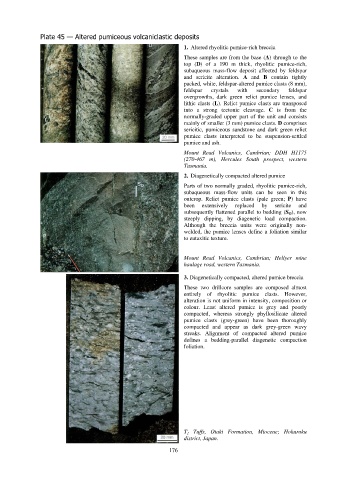
Plate 45 — Altered pumiceous volcaniclastic deposits
                                                                  1.  Altered rhyolitic pumice-rich breccia
                                                                  These samples are from the base (A) through to the
                                                                  top (D) of a 190  m thick, rhyolitic pumice-rich,
                                                                  subaqueous mass-flow  deposit affected by feldspar
                                                                  and sericite  alteration.  A and  B contain tightly
                                                                  packed, white, feldspar-altered pumice clasts (8 mm),
                                                                  feldspar  crystals  with  secondary  feldspar
                                                                  overgrowths,  dark  green relict pumice lenses, and
                                                                  lithic clasts (L). Relict pumice clasts are transposed
                                                                  into a strong tectonic cleavage.  C is  from the
                                                                  normally-graded upper  part of the unit and consists
                                                                  mainly of smaller (3 mm) pumice clasts. D comprises
                                                                  sericitic, pumiceous sandstone and dark green relict
                                                                  pumice clasts interpreted to  be suspension-settled
                                                                   pumice and ash.

                                                                  Mount Read  Volcanics, Cambrian; DDH  H1175
                                                                  (270-467 m), Hercules  South prospect, western
                                                                  Tasmania.
                                                                  2.  Diagenetically compacted altered pumice
                                                                  Parts of two normally graded, rhyolitic pumice-rich,
                                                                  subaqueous mass-flow  units can be seen in this
                                                                  outcrop. Relict pumice clasts (pale  green;  P) have
                                                                  been  extensively  replaced  by  sericite  and
                                                                  subsequently flattened parallel to bedding (S O), now
                                                                  steeply dipping,  by diagenetic load compaction.
                                                                  Although the breccia units were  originally non-
                                                                  welded, the pumice lenses define a foliation similar
                                                                  to eutaxitic texture.


                                                                  Mount  Read Volcanics,  Cambrian; Hellyer  mine
                                                                  haulage road, western Tasmania.

                                                                  3. Diagenetically compacted, altered pumice breccia
                                                                  These two  drillcore samples are composed almost
                                                                  entirely of rhyolitic pumice clasts. However,
                                                                  alteration is not uniform in intensity, composition or
                                                                  colour. Least altered  pumice is grey and poorly
                                                                  compacted, whereas  strongly phyllosilicate altered
                                                                  pumice clasts (grey-green) have  been thoroughly
                                                                  compacted and appear as  dark  grey-green  wavy
                                                                  streaks.  Alignment of compacted altered pumice
                                                                  defines a bedding-parallel diagenetic compaction
                                                                  foliation.


                                                                  T 1 Tuffs, Otaki Formation, Miocene;  Hokuroku
                                                                  district, Japan.

                                                            176

