


Page 155 - Wire Bonding in Microelectronics
P. 155
Gold-Aluminum Intermetallic Compounds       133


                                      Weight percent gold
                       10  50    70   80  85  90      95

                                      AuAl 2
                   1200

                   1100
                                    1060°                      1063°
                   1000
                                             AuAl
                  Temperature (°C)  800             Au 2 Al  Au 5 Al 2  Au 4 Al  (Au)
                    900


                    700
                    660°      642°       625°  56.5  624°
                    600                       569°      72
                                                         80
                                                59.5         545°, ~84
                    500                                525°   85.8
                                                575°   775  β
                    400                                 ?    ?  90
                                                            µ    94
                    300
                      0   10   20  30   40  50   60  70  80   90  100
                                      Atomic percent gold
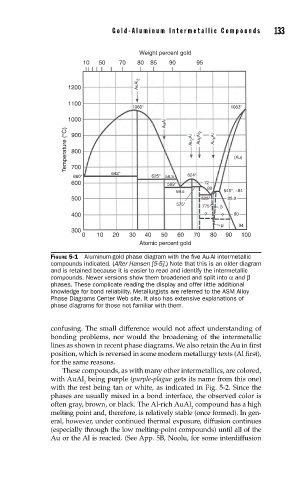
              FIGURE 5-1  Aluminum-gold phase diagram with the fi ve Au-Al intermetallic
              compounds indicated. (After Hansen [5-5].) Note that this is an older diagram
              and is retained because it is easier to read and identify the intermetallic
              compounds. Newer versions show them broadened and split into α and β
              phases. These complicate reading the display and offer little additional
              knowledge for bond reliability. Metallurgists are referred to the ASM Alloy
              Phase Diagrams Center Web site. It also has extensive explanations of
              phase diagrams for those not familiar with them.


              confusing. The small difference would not affect understanding of
              bonding problems, nor would the broadening of the intermetallic
              lines as shown in recent phase diagrams. We also retain the Au in first
              position, which is reversed in some modern metallurgy texts (Al first),
              for the same reasons.
                 These compounds, as with many other intermetallics, are colored,
              with AuAl  being purple (purple-plague gets its name from this one)
                       2
              with the rest being tan or white, as indicated in Fig. 5-2. Since the
              phases are usually mixed in a bond interface, the observed color is
              often gray, brown, or black. The Al-rich AuAl  compound has a high
                                                    2
              melting point and, therefore, is relatively stable (once formed). In gen-
              eral, however, under continued thermal exposure, diffusion continues
              (especially through the low melting-point compounds) until all of the
              Au or the Al is reacted. (See App. 5B, Noolu, for some interdiffusion

