


Page 114 -
P. 114
3.4 / BUS INTERCONNECTION 87

                                   Bus


                                                                     Boards
                                               CPU
                                             Memory


                                         •
                                         •
                                         •


                                               I/O


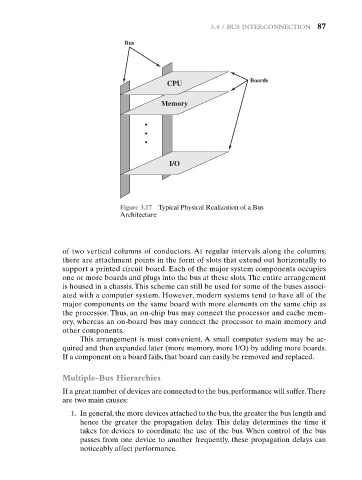
                                  Figure 3.17  Typical Physical Realization of a Bus
                                  Architecture


                  of two vertical columns of conductors. At regular intervals along the columns,
                  there are attachment points in the form of slots that extend out horizontally to
                  support a printed circuit board. Each of the major system components occupies
                  one or more boards and plugs into the bus at these slots. The entire arrangement
                  is housed in a chassis. This scheme can still be used for some of the buses associ-
                  ated with a computer system. However, modern systems tend to have all of the
                  major components on the same board with more elements on the same chip as
                  the processor. Thus, an on-chip bus may connect the processor and cache mem-
                  ory, whereas an on-board bus may connect the processor to main memory and
                  other components.
                       This arrangement is most convenient. A small computer system may be ac-
                  quired and then expanded later (more memory, more I/O) by adding more boards.
                  If a component on a board fails, that board can easily be removed and replaced.


                  Multiple-Bus Hierarchies
                  If a great number of devices are connected to the bus, performance will suffer.There
                  are two main causes:
                    1. In general, the more devices attached to the bus, the greater the bus length and
                       hence the greater the propagation delay. This delay determines the time it
                       takes for devices to coordinate the use of the bus. When control of the bus
                       passes from one device to another frequently, these propagation delays can
                       noticeably affect performance.

