


Page 599 - Fundamentals of Water Treatment Unit Processes : Physical, Chemical, and Biological
P. 599
554                            Fundamentals of Water Treatment Unit Processes: Physical, Chemical, and Biological


            17.3.6 OSMOSIS                                     to right is less. As the water level rises, the water flux from left
                                                               to right increases due to the pressure differential until the two
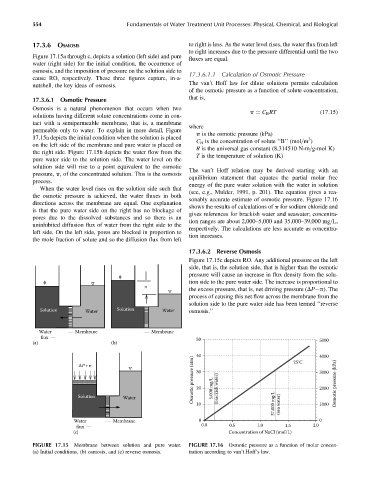
            Figure 17.15a through c, depicts a solution (left side) and pure
                                                               fluxes are equal.
            water (right side) for the initial condition, the occurrence of
            osmosis, and the imposition of pressure on the solution side to  17.3.6.1.1  Calculation of Osmotic Pressure
            cause RO, respectively. These three figures capture, in-a-
                                                               The van’t Hoff law for dilute solutions permits calculation
            nutshell, the key ideas of osmosis.
                                                               of the osmotic pressure as a function of solute concentration,
            17.3.6.1  Osmotic Pressure                         that is,
            Osmosis is a natural phenomenon that occurs when two
                                                                                   p ¼ C B RT             (17:15)
            solutions having different solute concentrations come in con-
            tact with a semipermeable membrane, that is, a membrane
                                                               where
            permeable only to water. To explain in more detail, Figure
                                                                  p is the osmotic pressure (kPa)
            17.15a depicts the initial condition when the solution is placed                          3
                                                                  C B is the concentration of solute ‘‘B’’ (mol=m )
            on the left side of the membrane and pure water is placed on
                                                                  R is the universal gas constant (8.314510 N-m=g-mol K)
            the right side. Figure 17.15b depicts the water flow from the
                                                                  T is the temperature of solution (K)
            pure water side to the solution side. The water level on the
            solution side will rise to a point equivalent to the osmotic
                                                               The van’t Hoff relation may be derived starting with an
            pressure, p, of the concentrated solution. This is the osmosis
                                                               equilibrium statement that equates the partial molar free
            process.
                                                               energy of the pure water solution with the water in solution
              When the water level rises on the solution side such that
                                                               (see, e.g., Mulder, 1991, p. 201). The equation gives a rea-
            the osmotic pressure is achieved, the water fluxes in both
                                                               sonably accurate estimate of osmotic pressure. Figure 17.16
            directions across the membrane are equal. One explanation
                                                               shows the results of calculations of p for sodium chloride and
            is that the pure water side on the right has no blockage of
                                                               gives references for brackish water and seawater; concentra-
            pores due to the dissolved substances and so there is an
                                                               tion ranges are about 2,000–5,000 and 35,000–39,000 mg=L,
            uninhibited diffusion flux of water from the right side to the
                                                               respectively. The calculations are less accurate as concentra-
            left side. On the left side, pores are blocked in proportion to
                                                               tion increases.
            the mole fraction of solute and so the diffusion flux from left
                                                               17.3.6.2  Reverse Osmosis
                                                               Figure 17.15c depicts RO. Any additional pressure on the left
                                                               side, that is, the solution side, that is higher than the osmotic
                                                               pressure will cause an increase in flux density from the solu-
                                                               tion side to the pure water side. The increase is proportional to
                                                 π
                                                               the excess pressure, that is, net driving pressure (DP p). The
                                                               process of causing this net flow across the membrane from the
                                                               solution side to the pure water side has been termed ‘‘reverse
              Solution       Water     Solution       Water    osmosis.’’
              Water       Membrane                 Membrane
              flux                                                50                                      5000
            (a)                       (b)

                                                                  40                                      4000
                                                                Osmotic pressure (atm)  20  (brackish water)   2000 Osmotic pressure (kPa)
                           ΔP+π                                   30                              25°C    3000


                           Solution       Water                   10   5,000 mg/L          37,000 mg/L  (sea water)   1000


                         Water        Membrane                    0                                       0
                                                                   0.0      0.5       1.0      1.5      2.0
                          flux
                         (c)                                                Concentration of NaCl (mol/L)
            FIGURE 17.15 Membrane between solution and pure water.  FIGURE 17.16 Osmotic pressure as a function of molar concen-
            (a) Initial conditions, (b) osmosis, and (c) reverse osmosis.  tration according to van’t Hoff’s law.

