


Page 570 - Instrumentation Reference Book 3E
P. 570
552  Measurements employing nuclear techniques

            emitted by the substance when irradiated with X-   The intensity thus received will be proportional to
            rays is determined by means of a dispersive X-ray   cos 6’ and to dQ. After dividing by cos 0 and cor-
            spectrometer, which uses as its analyzing element   recting for the variation with angle of the reflec-
            the regular  structure of a crystal through  which   tion  coefficient  of  the crystal  and  the variation
            the characteristic  X-rays  are passed. This prop-   with  wavelength  of  the  detector  efficiency, the
            erty was discovered by Bragg and Bragg in 1913,   recorded signal will be proportional to the inten-
            who produced the first X-ray spectrum by crystal   sity per unit wavelength interval, and it is in this
            diffraction through a crystal of rock salt.   form that continuous X-ray spectra are tradition-
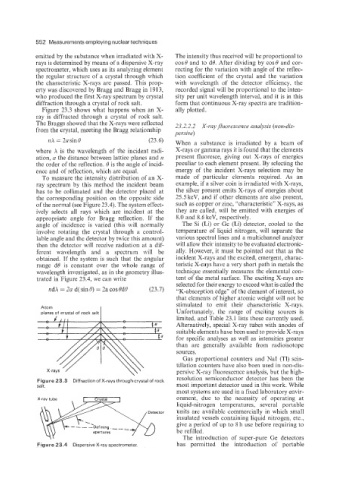
              Figure 23.3  shows what  happens  when  an X-   ally plotted.
            ray  is  diffracted  through a  crystal  of  rock  salt.
            The Braggs showed that the X-rays were reflected   23.2.2.2  X-rayJluovt.sceizce analysis (non-dis-
            from the crystal, meeting the Bragg relationship   y evsive)
               1zX  = 2a sin 6’              (23.6)   When  a  substance  is  irradiated  by  a  beam  of
            where  X  is the wavelength of  the  incident  radi-   X-rays or gamma rays it is found that the elements
            ation, a the distance between lattice planes and IZ   present  fluoresce, giving out  X-rays  of  energies
            the order of the reflection. 6’ is the angle of incid-   peculiar to each element present. By selecting the
            ence and of reflection, which are equal.   energy  of  the  incident X-rays  selection may  be
              To measure the intensity distribution of an X-   made  of  particular  elements  required.  As  an
            ray  spectrum  by  this method  the incident  beam   example. if a silver coin is irradiated with X-rays,
            has to be  collimated and the detector  placed  at   the silver present emits X-rays of energies about
            the corresponding  position  on the opposite  side   25.5 keV, and if other elements are also present,
            of the normal (see Figure 23.4). The system effect-   such as copper or zinc, “characteristic” X-rays, as
            ively  selects  all  rays  which  are  incident  at  the   they  are called. will  be  emitted with energies of
            appropriate  angle  for  Bragg  reflection.  If  the   8.0 and 8.6 keV, respectively.
            angle  of  incidence is  varied  (this  will  normally   The Si  (Li) or Ge (Li) detector, cooled to the
            involve  rotating  the  crystal  through  a  control-   temperature  of  liquid nitrogen, will  separate the
            lable angle and the detector by twice this amount)   various spectral lines and a multichannel analyzer
            then the detector  will  receive  radiation  at a  dif-   will allow their intensity to be evaluated electronic-
            ferent  wavelength  and  a  spectrum  will  be   ally. However, it must be pointed out that as the
            obtained. If  the system is such that the angular   incident X-rays and the excited, emergent, charac-
            range  d6’  is  constant  over  the  whole  range  of   teristic X-rays have a very short path in metals the
            wavelength investigated, as in the geometry illus-   technique essentially nieasures the elemental con-
            trated in Figure 23.4, we can write      tent of the metal surface. The exciting X-rays are
                                                     selected for their energy to exceed what is called the
                iidX = 2a d( sin 6’)  = 2a cos 0d6’   (23.7)   “K-absorption edge” of the element of interest, so
                                                     that elements of higher atomic weight will not be
                                                     stimulated  to  emit  their  characteristic  X-rays.
             Atom
                                                     Unfortunately,  the  range  of  exciting  sources  is
                                                      limited, and Table 23.1 lists those currently used.
                                                     Alternatively, special X-ray tubes with anodes of
                                                      suitable elements have been used to provide X-rays
                                                      for specific analyses as well  as intensities greater
                                                      than  are  generally  available  from  radioisotope
                                                      sources.
                                                       Gas proportional  counters and NaI (Tl) scin-
                                                      tillation counters have also been used in non-dis-
                                                      persive X-ray fluorescence analysis, but the high-
                                                      resolution  semiconductor  detector  has  been  the
            Figure 23.3  Diffraction of X-rays through crystal of rock
            salt.                                     most important detector used in this work. While
                                                      most systems are used in a fixed laboratory envir-
            X-ray tube                                onment,  due  to  the  necessity  of  operating  at
                                                      liquid-nitrogen  temperatures,  several  portable
                                             Detector   units  are available commercially in which small
                                                      insulated vessels containing  liquid nitrogen, etc.,
                                                      give a period of up to 8 h use before requiring to
                             apertures                be refilled.
                                                       The  introduction  of  super-pure  Ge detectors
            Figure 23.4  Dispersive X-ray spectrometer.   has  permitted  the  introduction  of  portable

