


Page 163 - Low Temperature Energy Systems with Applications of Renewable Energy
P. 163
Heat pumps in the drying industry                                 153


                                                          Tank-accumulator
                                 SC


                                 Drying
                                chamber


                       CP    EV
                     TV
                         Heat pump
                                         Hot water outlet
                                   C         Cold water inlet


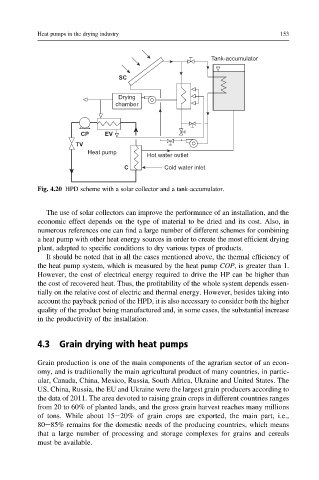
           Fig. 4.20 HPD scheme with a solar collector and a tank-accumulator.

              The use of solar collectors can improve the performance of an installation, and the
           economic effect depends on the type of material to be dried and its cost. Also, in
           numerous references one can find a large number of different schemes for combining
           a heat pump with other heat energy sources in order to create the most efficient drying
           plant, adapted to specific conditions to dry various types of products.
              It should be noted that in all the cases mentioned above, the thermal efficiency of
           the heat pump system, which is measured by the heat pump COP, is greater than 1.
           However, the cost of electrical energy required to drive the HP can be higher than
           the cost of recovered heat. Thus, the profitability of the whole system depends essen-
           tially on the relative cost of electric and thermal energy. However, besides taking into
           account the payback period of the HPD, it is also necessary to consider both the higher
           quality of the product being manufactured and, in some cases, the substantial increase
           in the productivity of the installation.


           4.3   Grain drying with heat pumps


           Grain production is one of the main components of the agrarian sector of an econ-
           omy, and is traditionally the main agricultural product of many countries, in partic-
           ular, Canada, China, Mexico, Russia, South Africa, Ukraine and United States. The
           US, China, Russia, the EU and Ukraine were the largest grain producers according to
           thedataof2011. Theareadevoted to raisinggrain crops in different countries ranges
           from 20 to 60% of planted lands, and the gross grain harvest reaches many millions
           of tons. While about 15e20% of grain crops are exported, the main part, i.e.,
           80e85% remains for the domestic needs of the producing countries, which means
           that a large number of processing and storage complexes for grains and cereals
           must be available.

