


Page 169 - Low Temperature Energy Systems with Applications of Renewable Energy
P. 169
Heat pumps in the drying industry                                 159


           Fig. 4.26 HPD with an auxiliary heater. C hp , heat pump condenser; E vhp , heat pump evaporator;
           H, auxiliary heater.


           empty hoppers or at times of heavy load on the compressor of the heat pump. One of
           the options for implementing such a technology is presented in Fig. 4.26.
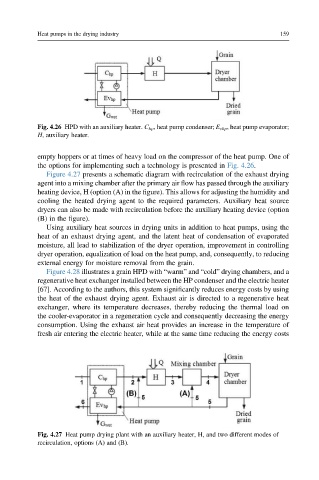
              Figure 4.27 presents a schematic diagram with recirculation of the exhaust drying
           agent into a mixing chamber after the primary air flow has passed through the auxiliary
           heating device, H (option (A) in the figure). This allows for adjusting the humidity and
           cooling the heated drying agent to the required parameters. Auxiliary heat source
           dryers can also be made with recirculation before the auxiliary heating device (option
           (B) in the figure).
              Using auxiliary heat sources in drying units in addition to heat pumps, using the
           heat of an exhaust drying agent, and the latent heat of condensation of evaporated
           moisture, all lead to stabilization of the dryer operation, improvement in controlling
           dryer operation, equalization of load on the heat pump, and, consequently, to reducing
           external energy for moisture removal from the grain.
              Figure 4.28 illustrates a grain HPD with “warm” and “cold” drying chambers, and a
           regenerative heat exchanger installed between the HP condenser and the electric heater
           [67]. According to the authors, this system significantly reduces energy costs by using
           the heat of the exhaust drying agent. Exhaust air is directed to a regenerative heat
           exchanger, where its temperature decreases, thereby reducing the thermal load on
           the cooler-evaporator in a regeneration cycle and consequently decreasing the energy
           consumption. Using the exhaust air heat provides an increase in the temperature of
           fresh air entering the electric heater, while at the same time reducing the energy costs


           Fig. 4.27 Heat pump drying plant with an auxiliary heater, H, and two different modes of
           recirculation, options (A) and (B).

