


Page 214 - Low Temperature Energy Systems with Applications of Renewable Energy
P. 214
Heating with geothermal systems                                   201


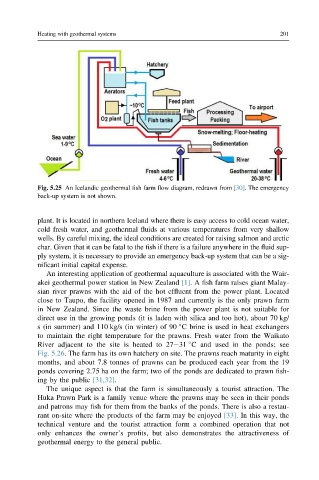
           Fig. 5.25 An Icelandic geothermal fish farm flow diagram, redrawn from [30]. The emergency
           back-up system is not shown.


           plant. It is located in northern Iceland where there is easy access to cold ocean water,
           cold fresh water, and geothermal fluids at various temperatures from very shallow
           wells. By careful mixing, the ideal conditions are created for raising salmon and arctic
           char. Given that it can be fatal to the fish if there is a failure anywhere in the fluid sup-
           ply system, it is necessary to provide an emergency back-up system that can be a sig-
           nificant initial capital expense.
              An interesting application of geothermal aquaculture is associated with the Wair-
           akei geothermal power station in New Zealand [1].A fish farm raises giant Malay-
           sian river prawns with the aid of the hot effluent from the power plant. Located
           close to Taupo, the facility opened in 1987 and currently is the only prawn farm
           in New Zealand. Since the waste brine from the power plant is not suitable for
           direct use in the growing ponds (it is laden with silica and too hot), about 70 kg/

           s (in summer) and 110 kg/s (in winter) of 90 C brine is used in heat exchangers
           to maintain the right temperature for the prawns. Fresh water from the Waikato
           River adjacent to the site is heated to 27e31 C and used in the ponds; see

           Fig. 5.26. The farm has its own hatchery on site. The prawns reach maturity in eight
           months, and about 7.8 tonnes of prawns can be produced each year from the 19
           ponds covering 2.75 ha on the farm; two of the ponds are dedicated to prawn fish-
           ing by the public [31,32].
              The unique aspect is that the farm is simultaneously a tourist attraction. The
           Huka Prawn Park is a family venue where the prawns may be seen in their ponds
           and patrons may fish for them from the banks of the ponds. There is also a restau-
           rant on-site where the products of the farm may be enjoyed [33].In thisway,the
           technical venture and the tourist attraction form a combined operation that not
           only enhances the owner’sprofits, but also demonstrates the attractiveness of
           geothermal energy to the general public.

