


Page 215 - Low Temperature Energy Systems with Applications of Renewable Energy
P. 215
202                 Low-Temperature Energy Systems with Applications of Renewable Energy


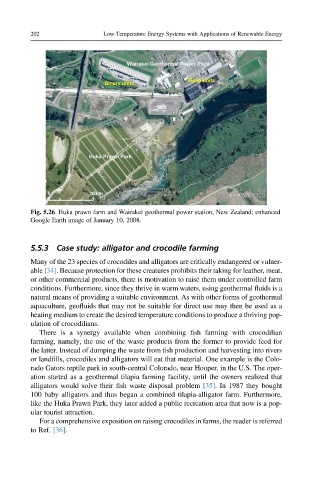
         Fig. 5.26 Huka prawn farm and Wairakei geothermal power station, New Zealand; enhanced
         Google Earth image of January 10, 2008.


         5.5.3  Case study: alligator and crocodile farming

         Many of the 23 species of crocodiles and alligators are critically endangered or vulner-
         able [34]. Because protection for these creatures prohibits their taking for leather, meat,
         or other commercial products, there is motivation to raise them under controlled farm
         conditions. Furthermore, since they thrive in warm waters, using geothermal fluids is a
         natural means of providing a suitable environment. As with other forms of geothermal
         aquaculture, geofluids that may not be suitable for direct use may then be used as a
         heating medium to create the desired temperature conditions to produce a thriving pop-
         ulation of crocodilians.
            There is a synergy available when combining fish farming with crocodilian
         farming, namely, the use of the waste products from the former to provide feed for
         the latter. Instead of dumping the waste from fish production and harvesting into rivers
         or landfills, crocodiles and alligators will eat that material. One example is the Colo-
         rado Gators reptile park in south-central Colorado, near Hooper, in the U.S. The oper-
         ation started as a geothermal tilapia farming facility, until the owners realized that
         alligators would solve their fish waste disposal problem [35]. In 1987 they bought
         100 baby alligators and thus began a combined tilapia-alligator farm. Furthermore,
         like the Huka Prawn Park, they later added a public recreation area that now is a pop-
         ular tourist attraction.
            For a comprehensive exposition on raising crocodiles in farms, the reader is referred
         to Ref. [36].

