


Page 280 - Low Temperature Energy Systems with Applications of Renewable Energy
P. 280
266                 Low-Temperature Energy Systems with Applications of Renewable Energy


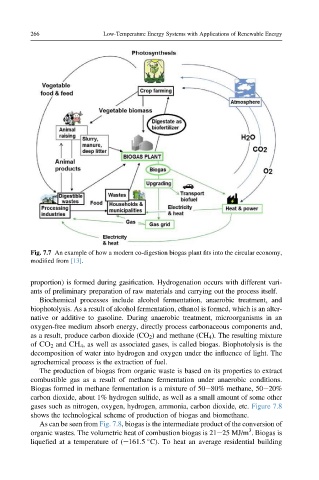
         Fig. 7.7 An example of how a modern co-digestion biogas plant fits into the circular economy,
         modified from [13].

         proportion) is formed during gasification. Hydrogenation occurs with different vari-
         ants of preliminary preparation of raw materials and carrying out the process itself.
            Biochemical processes include alcohol fermentation, anaerobic treatment, and
         biophotolysis. As a result of alcohol fermentation, ethanol is formed, which is an alter-
         native or additive to gasoline. During anaerobic treatment, microorganisms in an
         oxygen-free medium absorb energy, directly process carbonaceous components and,
         as a result, produce carbon dioxide (CO 2 ) and methane (CH 4 ). The resulting mixture
         of SP 2 and SO 4 , as well as associated gases, is called biogas. Biophotolysis is the
         decomposition of water into hydrogen and oxygen under the influence of light. The
         agrochemical process is the extraction of fuel.
            The production of biogas from organic waste is based on its properties to extract
         combustible gas as a result of methane fermentation under anaerobic conditions.
         Biogas formed in methane fermentation is a mixture of 50e80% methane, 50e20%
         carbon dioxide, about 1% hydrogen sulfide, as well as a small amount of some other
         gases such as nitrogen, oxygen, hydrogen, ammonia, carbon dioxide, etc. Figure 7.8
         shows the technological scheme of production of biogas and biomethane.
            As can be seen from Fig. 7.8, biogas is the intermediate product of the conversion of
                                                                    3
         organic wastes. The volumetric heat of combustion biogas is 21e25 MJ/m . Biogas is

         liquefied at a temperature of (e161.5 C). To heat an average residential building

