


Page 281 - Low Temperature Energy Systems with Applications of Renewable Energy
P. 281
Biofuels conversion: energy-saving processes and use of biogas    267


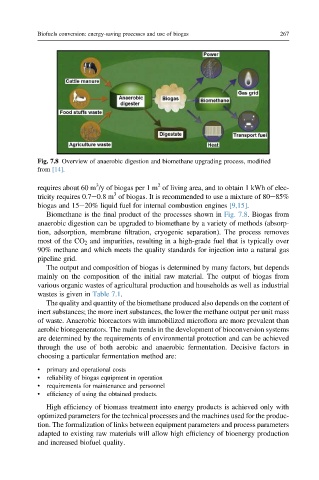
           Fig. 7.8 Overview of anaerobic digestion and biomethane upgrading process, modified
           from [14].

                           3
                                            2
           requires about 60 m /y of biogas per 1 m of living area, and to obtain 1 kWh of elec-
                                3
           tricity requires 0.7e0.8 m of biogas. It is recommended to use a mixture of 80e85%
           biogas and 15e20% liquid fuel for internal combustion engines [9,15].
              Biomethane is the final product of the processes shown in Fig. 7.8. Biogas from
           anaerobic digestion can be upgraded to biomethane by a variety of methods (absorp-
           tion, adsorption, membrane filtration, cryogenic separation). The process removes
           most of the CO 2 and impurities, resulting in a high-grade fuel that is typically over
           90% methane and which meets the quality standards for injection into a natural gas
           pipeline grid.
              The output and composition of biogas is determined by many factors, but depends
           mainly on the composition of the initial raw material. The output of biogas from
           various organic wastes of agricultural production and households as well as industrial
           wastes is given in Table 7.1.
              The quality and quantity of the biomethane produced also depends on the content of
           inert substances; the more inert substances, the lower the methane output per unit mass
           of waste. Anaerobic bioreactors with immobilized microflora are more prevalent than
           aerobic bioregenerators. The main trends in the development of bioconversion systems
           are determined by the requirements of environmental protection and can be achieved
           through the use of both aerobic and anaerobic fermentation. Decisive factors in
           choosing a particular fermentation method are:
           •  primary and operational costs
           •  reliability of biogas equipment in operation
           •  requirements for maintenance and personnel
           •  efficiency of using the obtained products.
              High efficiency of biomass treatment into energy products is achieved only with
           optimized parameters for the technical processes and the machines used for the produc-
           tion. The formalization of links between equipment parameters and process parameters
           adapted to existing raw materials will allow high efficiency of bioenergy production
           and increased biofuel quality.

