


Page 233 - Materials Chemistry, Second Edition
P. 233
220                                                         3 Metals


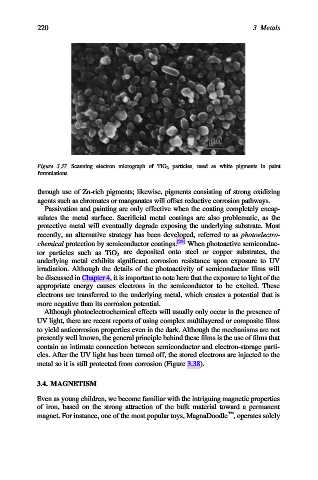
           Figure 3.37. Scanning electron micrograph of TiO 2 particles, used as white pigments in paint
           formulations.

           through use of Zn-rich pigments; likewise, pigments consisting of strong oxidizing
           agents such as chromates or manganates will offset reductive corrosion pathways.
             Passivation and painting are only effective when the coating completely encap-
           sulates the metal surface. Sacrificial metal coatings are also problematic, as the
           protective metal will eventually degrade exposing the underlying substrate. Most
           recently, an alternative strategy has been developed, referred to as photoelectro-
                                                  [23]
           chemical protection by semiconductor coatings.  When photoactive semiconduc-
           tor particles such as TiO 2 are deposited onto steel or copper substrates, the
           underlying metal exhibits significant corrosion resistance upon exposure to UV
           irradiation. Although the details of the photoactivity of semiconductor films will
           be discussed in Chapter 4, it is important to note here that the exposure to light of the
           appropriate energy causes electrons in the semiconductor to be excited. These
           electrons are transferred to the underlying metal, which creates a potential that is
           more negative than its corrosion potential.
             Although photoelectrochemical effects will usually only occur in the presence of
           UV light, there are recent reports of using complex multilayered or composite films
           to yield anticorrosion properties even in the dark. Although the mechanisms are not
           presently well known, the general principle behind these films is the use of films that
           contain an intimate connection between semiconductor and electron-storage parti-
           cles. After the UV light has been turned off, the stored electrons are injected to the
           metal so it is still protected from corrosion (Figure 3.38).

           3.4. MAGNETISM

           Even as young children, we become familiar with the intriguing magnetic properties
           of iron, based on the strong attraction of the bulk material toward a permanent
                                                                ™
           magnet. For instance, one of the most popular toys, MagnaDoodle , operates solely

