


Page 139 - Mechanical Engineers Reference Book
P. 139
3/22  Microprocessors, instrumentation and control

                   - signals
                        --
           -      Trans-           Telemetry         Data
                                                   processing -
           7      ducer      -  -            ;
                         signals
                                        1           il

                                                                -
                                            Computer/          -
                                            controller


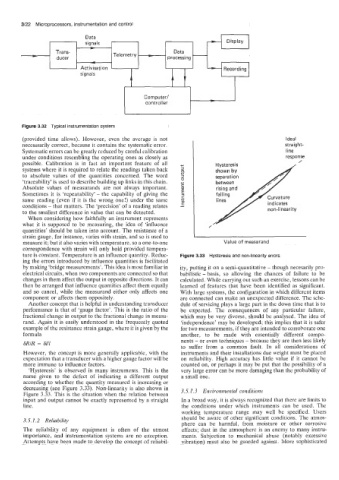
        Figure 3.32  Typical instrumentation system
        (provided  time  allows).  However,  even  the  average  is  not              Ideal
        necesssarily correct, because it contains the systematic error.               straight-
        Systematic errors can be greatly reduced by careful calibration               line
        under conditions resembling  the operating ones as closely as                 response
        possible.  Calibration  is  in  fact  an  important  feature  of  all   Hysteresis   /
        systems where it is required  to relate the readings taken back   shown by
        to  absolute  values  of  the  quantities  concerned.  The  word
        ‘traceability’ is used to describe building up links in this chain.
        Absolute  values  of  measurands  are  not  always  important.
        Sometimes  it  is  ‘repeatability’ -the  capability  of  giving the
        same reading  (even  if  it is the wrong one!)  under the  same
        conditions - that matters. The ‘precision’ of  a reading relates
        to the smallest difference in value that can be detected.
         When considering  how faithfully  an instrument  represents
        what  it  is supposed  to be measuring,  the  idea  of  ‘influence
        quantities’ should be taken into account. The resistance of  a
        strain gauge, for instance, varies with strain, and so is used to
        measure it; but it also varies with temperature, so a one-to-one   Value of measurand
        correspondence  with strain will only hold provided tempera-
        ture is constant. Temperature is an influence quantity. Reduc-   Figure 3.33  Hysteresis and non-linearity errors
        ing the errors introduced by influence quantities is facilitated
        by making ‘bridge measurements’. This idea is most familiar in   ity, putting it on a semi-quantitative -though  necesarily pro-
        electrical circuits, when two components are connected so that   babilistic - basis,  so  allowing  the  chances  of  failure  to  be
        changes in them affect the output in opposite directions. It can   calculated. While carrying out such an exercise, lessons can be
        then be arranged that influence quantities affect them equally   learned  of  features that  have  been  identified  as  significant.
        and so cancel,  while  the  measurand  either only  affects  one   With large systems, the configuration in which different items
        component or affects them oppositely.          are connected can make an unexpected  difference. The sche-
          Another concept that is helpful in understanding transducer   dule of  servicing plays a large part in the down time that is to
        performance  is that of  ‘gauge factor’. This is the ratio of  the   be  expected.  The  consequences  of  any  particular  failure,
        fractional change in output to the fractional change in measu-   which may be very diverse, should be analysed.  The idea of
        rand.  Again  it is easily understood  in the frequently  quoted   ‘independence’ may be developed; this implies that it is safer
        example of the resistance strain gauge, where it is given by the   for two measurements, if they are intended to corroborate one
        formula                                        another,  to  be  made  with  essentially  different  compo-
                                                       nents - or even techniques - because they are then less likely
        6RIR = 6111
                                                       to  suffer  from  a  common  fault.  In  all  considerations  of
        However, the concept is more generally  applicable, with the   instruments and their installations due weight must be placed
        expectation that a transducer with a higher gauge factor will be   on reliability.  High  accuracy  has  little value if  it  cannot  be
        more immune to influence factors.              counted on, or perhaps it may be put that the possibility of  a
          ‘Hysteresis’ is  observed  in  many  instruments.  This  is  the   very large error can be more damaging than the probability of
        name  given  to  the  defect  of  indicating  a  different  output   a small one.
        according  to whether  the quantity  measured  is increasing  or
        decreasing  (see  Figure  3.33). Non-linearity  is  also shown  in   3.5.1.3  Environmental conditions
        Figure 3.33. This is the situation when the relation  between
        input  and output cannot  be exactly represented by  a straight   In a broad way, it is always recognized that there are limits to
        line.                                          the  conditions  under  which  instruments  can  be  used.  The
                                                       working  temperature  range  may  well  be  specified.  Users
                                                       should be  aware  of  other significant conditions.  The atmos-
        3.5.1.2  Reliability                           phere  can  be  harmful,  from  moisture  or  other  corrosive
        The  reliability  of  any  equipment  is  often  of  the  utmost   effects; dust  in the atmosphere is an enemy to many instru-
        importance,  and  instrumentation  systems  are no  exception.   ments.  Subjection  to  mechanical  abuse  (notably  excessive
        Attempts have been made to develop the concept of reliabil-   vibration)  must  also be  guarded  against.  More sophisticated

