


Page 208 - MODELING OF ASPHALT CONCRETE
P. 208
186    Cha pte r  Se v e n


                    the real elastic benefit of modified mixtures in the field (i.e., under loading rates
                    experienced in the field) occurs at high temperatures.
                       Figure 7-12 reinforces the importance of both rate and temperature when
                    conceptualizing asphalt concrete behavior. Recall that the reduced strain rate is
                    dependent on both the physical strain rate and the temperature. According to this
                    concept it is possible, then, that viscoplastic mechanisms can significantly impact
                    material behavior at even very low temperatures if the strain rate is slow enough. Stated
                    more generally, viscoplasticity can affect material behavior at any temperature if the
                    input condition is slow. Conversely, any input condition can generate viscoplastic
                    effects if the temperature is high enough. This duality is critically important to the
                    proper understanding of the material behavior.


               Validation of the VEPCD Model in Tension
                    In this section, the VEPCD model calibrated for different mixtures is validated using
                    loading histories drastically different from those used in the calibration process. The
                    validation tests presented in this chapter include a random cyclic loading test, where
                    frequency, amplitude, and number of cycles are randomly assigned for each loading
                    group, and the TSRST strength test. The validation results of other loading histories can
                    be found in Kim and Chehab (2004) and Kim et al. (2005).
                       It is important to note that all graphs in this section are presented until localization.
                    Localization is the point at which a single macrocrack begins to dominate the material
                    behavior. At this point, strain measurements do not accurately represent the material
                    behavior over the measurement length. For the constant crosshead tests, it is observed
                    that localization occurs after the peak and at the point when the stress has reached about
                    90% of the peak stress. For the random load tests, localization is defined by measuring
                    deformations with two different gauge lengths (100 mm and 75 mm) over the middle of
                    the specimen. When these two measurements diverge, localization occurs (Fig. 7-13).


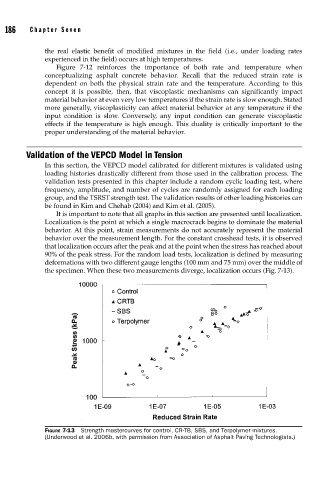
                    FIGURE 7-13  Strength mastercurves for control, CR-TB, SBS, and Terpolymer mixtures.
                    (Underwood et al. 2006b, with permission from Association of Asphalt Paving Technologists.)

