


Page 293 - Modular design for machine tools
P. 293
252   Engineering Design for Machine Tool Joints


                                                  Expressions


                                (Groth, 1972 [39])


                                                  (Tsutsumi & Ito,
                  (Reshetov &
               Levina, 1956 [38])   (Dekoninck, 1972 [40])  1980 [41])


                    1960          1970         1980           1990          2000
                                  (Rogers & Boothroyd,   (Beards &
                                      1975 [25])   Neroutsopoulos,
                                    Hysteresis loop  1980 [43])
                                                   Loss factor of
                                                     EDM joint
                                (Hashimoto &
                               Kume, 1972 [42])   Hysteresis loop, vibration
                            Vibration transmittability   transmittability, loss
                                                  factor and so on
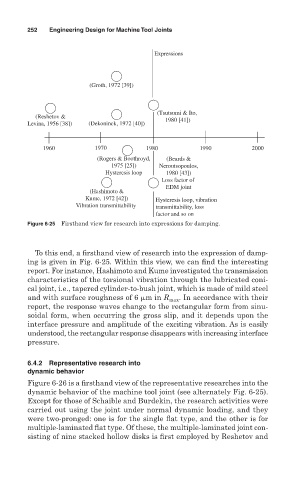
               Figure 6-25 Firsthand view for research into expressions for damping.


                 To this end, a firsthand view of research into the expression of damp-
               ing is given in Fig. 6-25. Within this view, we can find the interesting
               report. For instance, Hashimoto and Kume investigated the transmission
               characteristics of the torsional vibration through the lubricated coni-
               cal joint, i.e., tapered  cylinder- to-bush joint, which is made of mild steel
               and with surface roughness of 6  m in R max . In accordance with their
               report, the response waves change to the rectangular form from sinu-
               soidal form, when occurring the gross slip, and it depends upon the
               interface pressure and amplitude of the exciting vibration. As is easily
               understood, the rectangular response disappears with increasing interface
               pressure.


               6.4.2  Representative research into
               dynamic behavior
               Figure 6-26 is a firsthand view of the representative researches into the
               dynamic behavior of the machine tool joint (see alternately Fig. 6-25).
               Except for those of Schaible and Burdekin, the research activities were
               carried out using the joint under normal dynamic loading, and they
               were  two-pronged: one is for the single flat type, and the other is for
               multiple-laminated flat type. Of these, the multiple-laminated joint con-
               sisting of nine stacked hollow disks is first employed by Reshetov and

