


Page 294 - Modular design for machine tools
P. 294
Engineering Design Fundamentals and Single Flat Joint Characteristics        253


                                                   Multiple-laminated
                                                   joint
                            (Andrew et al.,
                             1967 [46])
                   (Loewenfeld,
                    1959 [44])


                                       (Burdekin et al.,
                 (Reshetov &   (PERA, late
               Levina, 1956 [38])   1960s [45])  1978 [27])
                                      Tangential loading
                      1960         1970          1980         1990          2000
                                    (Schaible, 1974 [47])
                      (Eisele & Corbach,
                                     Column-to-base joint,
                        1964 [9])    bending excitation
                           (Corbach,  (Thornley &   (Schaible,
                           1966 [14])  Koenigsberger,  1977 [48])
                                   1971 [49])
                                                   Single joint
                                 (Thornley &
                                Lees, 1971 [50])
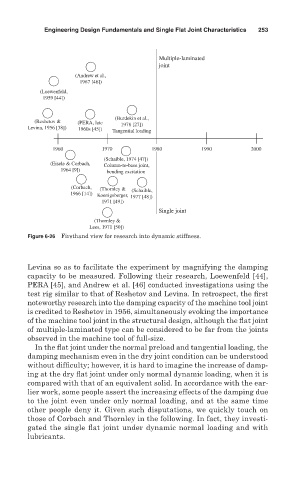
               Figure 6-26 Firsthand view for research into dynamic stiffness.


               Levina so as to facilitate the experiment by magnifying the damping
               capacity to be measured. Following their research, Loewenfeld [44],
               PERA [45], and Andrew et al. [46] conducted investigations using the
               test rig similar to that of Reshetov and Levina. In retrospect, the first
               noteworthy research into the damping capacity of the machine tool joint
               is credited to Reshetov in 1956, simultaneously evoking the importance
               of the machine tool joint in the structural design, although the flat joint
               of multiple-laminated type can be considered to be far from the joints
               observed in the machine tool of full-size.
                 In the flat joint under the normal preload and tangential loading, the
               damping mechanism even in the dry joint condition can be understood
               without difficulty; however, it is hard to imagine the increase of damp-
               ing at the dry flat joint under only normal dynamic loading, when it is
               compared with that of an equivalent solid. In accordance with the ear-
               lier work, some people assert the increasing effects of the damping due
               to the joint even under only normal loading, and at the same time
               other people deny it. Given such disputations, we quickly touch on
               those of Corbach and Thornley in the following. In fact, they investi-
               gated the single flat joint under dynamic normal loading and with
               lubricants.

