


Page 288 - Modular design for machine tools
P. 288
Engineering Design Fundamentals and Single Flat Joint Characteristics        247


                                                  Static loading


                  (Courtney-Pratt &
                  Eisner, 1957 [29])
                 Spherically ended cone
                  bearing on a plane
                         (Seireg & Weiter, 1966 [33])
                           Ball-to-plane contact                (Fujimoto et al., 1998 [34])
               (Johnson, 1955 [32])                              Annual plane-to-annual
               Ball-to-plane contact                                plane contact

                    1960         1970          1980          1990          2000

                  (Seireg & Weiter, 1962 [35])
                     Ball-to-pin contact

                 (Goodman & Brown, 1962 [36])
                   Sphere-to-plates contact
                                                  Dynamic loading, microslip,
                                                  and damping capacity
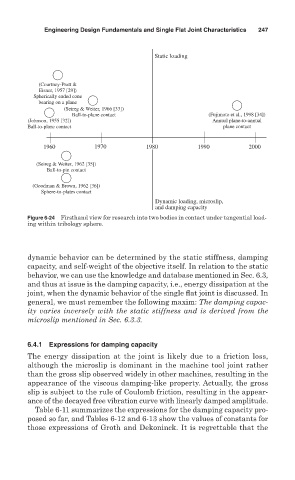
               Figure 6-24 Firsthand view for research into two bodies in contact under tangential load-
               ing within tribology sphere.


               dynamic behavior can be determined by the static stiffness, damping
               capacity, and  self-weight of the objective itself. In relation to the static
               behavior, we can use the knowledge and database mentioned in Sec. 6.3,
               and thus at issue is the damping capacity, i.e., energy dissipation at the
               joint, when the dynamic behavior of the single flat joint is discussed. In
               general, we must remember the following maxim: The damping capac-
               ity varies inversely with the static stiffness and is derived from the
               microslip mentioned in Sec. 6.3.3.


               6.4.1    Expressions for damping capacity
               The energy dissipation at the joint is likely due to a friction loss,
               although the microslip is dominant in the machine tool joint rather
               than the gross slip observed widely in other machines, resulting in the
               appearance of the viscous  damping-like property. Actually, the gross
               slip is subject to the rule of Coulomb friction, resulting in the appear-
               ance of the decayed free vibration curve with linearly damped amplitude.
                 Table 6-11 summarizes the expressions for the damping capacity pro-
               posed so far, and Tables 6-12 and 6-13 show the values of constants for
               those expressions of Groth and Dekoninck. It is regrettable that the

