


Page 365 - Physical chemistry understanding our chemical world
P. 365
332    ELECTROCHEMISTRY

                              Table 7.9  The advantages and disadvantages of using the saturated calomel
                              electrode (SCE)
                              Advantages of the SCE
                              Cost                SCEs are easy to make, and hence they are cheap
                              Size                SCEs can be made quite small (say, 2 cm long
                                                    and 0.5 cm in diameter)
                              Safety              Unlike the SHE, the SCE is non-flammable
                              Disadvantages of the SCE
                              Contamination       Chloride ions can leach out through the SCE sinter
                              Temperature effects  The value of dE/dT is quite large at 0.7mV K −1
                              Solvent             The SCE should not be used with non-aqueous
                                                    solutions


                      The silver–silver chloride electrode

                                      The silver–silver chloride electrode (SSCE) is another secondary
              We make the best films   reference electrode. A schematic of its half-cell is:
              of AgCl by anodizing a
              silver wire in aqueous
                                                         Ag|AgCl|KCl(aq, sat’d)
              KCl, not in HCl. The
              reasons for the differ-               O
                                      The value of E      = 0.222 V.
              ences in morphology                   AgCl,Ag
              are not clear.            The AgCl layer has a pale beige colour immediately it is made,
                                      but soon afterwards it assumes a pale mauve and then a dark purple
                                      aspect. The colour changes reflect chemical changes within the film,
              Photolytic breakdown    caused as a result of photolytic breakdown:
              is a big problem when                                           0    −
              we light the laboratory       AgCl + hν + electron donor −−→ Ag + Cl         (7.46)
              with fluorescent strips.
                                      The purple colour is caused by colloidal silver, formed in a sim-
                                      ilar manner to the image on a black-and-white photograph after
                      exposure to light. For this reason, an SSCE should be remade fairly frequently. (We
                      introduce colloids in Chapter 10.)
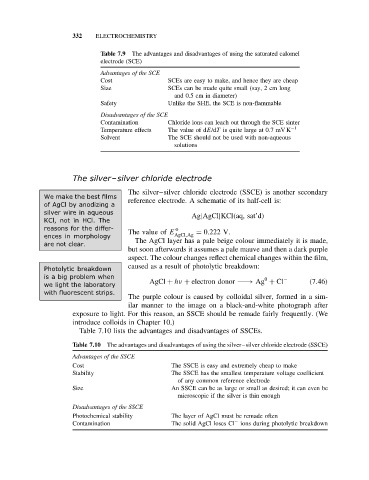
                        Table 7.10 lists the advantages and disadvantages of SSCEs.
                      Table 7.10 The advantages and disadvantages of using the silver–silver chloride electrode (SSCE)
                      Advantages of the SSCE
                      Cost                         The SSCE is easy and extremely cheap to make
                      Stability                    The SSCE has the smallest temperature voltage coefficient
                                                     of any common reference electrode
                      Size                         An SSCE can be as large or small as desired; it can even be
                                                     microscopic if the silver is thin enough
                      Disadvantages of the SSCE
                      Photochemical stability      The layer of AgCl must be remade often
                                                                     −
                      Contamination                The solid AgCl loses Cl ions during photolytic breakdown

