


Page 134 - Sedimentology and Stratigraphy
P. 134
Desert Environments    121


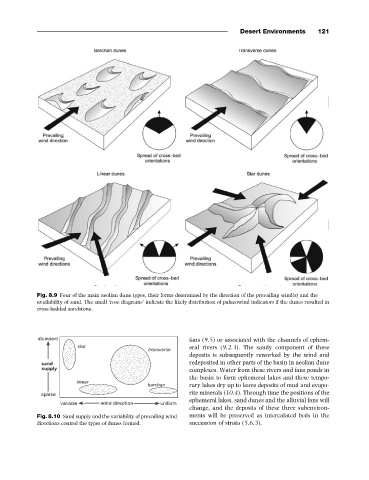
                 Fig. 8.9 Four of the main aeolian dune types, their forms determined by the direction of the prevailing wind(s) and the
                 availability of sand. The small ‘rose diagrams’ indicate the likely distribution of palaeowind indicators if the dunes resulted in
                 cross-bedded sandstone.


                      &                                       fans (9.5) or associated with the channels of ephem-

                               eral rivers (9.2.3). The sandy component of these

                                                              deposits is subsequently reworked by the wind and
                                                              redeposited in other parts of the basin in aeolian dune

                                      complexes. Water from these rivers and fans ponds in
                                                              the basin to form ephemeral lakes and these tempo-

                                                        	     rary lakes dry up to leave deposits of mud and evapo-
                   %   %                                      rite minerals (10.4). Through time the positions of the

   	              	$     ephemeral lakes, sand dunes and the alluvial fans will
                                                              change, and the deposits of these three subenviron-
                 Fig. 8.10 Sand supply and the variability of prevailing wind  ments will be preserved as intercalated beds in the
                 directions control the types of dunes formed.  succession of strata (5.6.3).

