


Page 191 - Separation process principles 2
P. 191
156  Chapter 4  Single Equilibrium Stages and Flash Calculations


                                                              rn

                   Reactor
                   effluent
                        1000 "F   500 "F      200 "F   w  -
                                                                     500 psia
                              r        w                     >
                                                                      1OO0F
                         Ibmollh
                   H2
                   CH,    2,000
                   Benzene   500
                   Toluene  2
                                      Liquid                      Liquid
                          4,600       quench
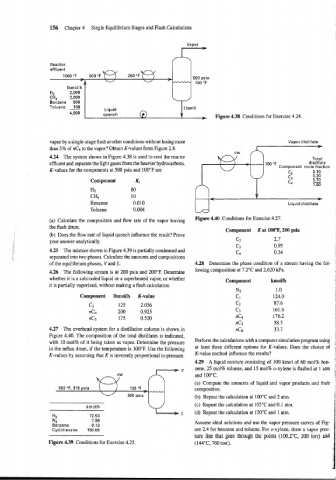
                                                                             Figure 4.38  Conditions for Exercise 4.24.


                   vapor by a single-stage flash at other conditions without losing more               Va~or distillate
                   than 5% of nC4 to the vapor? Obtain K-values from Figure 2.8.
                   4.24  The system shown in Figure 4.38 is used to cool the reactor
                   effluent and separate the light gases from the heavier hydrocarbons.
                   K-values for the components at 500 psia and 100°F are                      7 '""  '  Component  mole fraction
                                 Component       Ki

                                 H2             80
                                 CH4            10
                                 Benzene        0.010                 H                                Liquid distillate
                                 Toluene        0.004                 Ld
                                                                      Figure 4.40  Conditions for Exercise 4.27.
                   (a)  Calculate the composition and flow rate of  the vapor leaving
                   the flash drum.
                                                                                 Component  K at 100°F, 200 psia
                   (b)  Does the flow rate of liquid quench influence the result? Prove
                   your answer analytically.                                        c2            2.7
                                                                                    c3            0.95
                   4.25  The mixture shown in Figure 4.39 is partially condensed and
                                                                                    c4            0.34
                   separated into two phases. Calculate the amounts and compositions
                   of the equilibrium phases, V and L.                4.28  Determine the phase condition of a stream having the fol-
                   4.26  The following stream is at 200 psia and 200°F. Determine   lowing composition at 7.2OC and 2,620 kPa.
                   whether it is a subcooled liquid or a superheated vapor, or whether
                                                                                 Component       kmol/h
                   it is partially vaporized, without making a flash calculation.
                              Component   lbmoyh   K-value
                                 c3        125     2.056
                                 nC4       200     0.925
                                 nCs       175     0.520
                   4.27  The overhead system for a distillation column is shown in
                   Figure 4.40. The composition of the total distillates  is indicated,   Perform the calculations with a computer simulation program using  .
                                                                                                                       i
                   with  10 mol% of it being taken as vapor. Determine the pressure
                   in the reflux drum, if the temperature is 100°F. Use the following   at least three  different  options for K-values. Does  the  choice of  '
                                                                                                                       1
                   K-values by assuming that K is inversely proportional to pressure.   K-value method influence the results?
                                                                      4.29  A liquid mixture consisting of  100 kmol of 60 mol% ben-
                                                                                                                       '
                                                                      zene, 25 mol% toluene, and 15 mol% o-xylene is flashed at 1 atm
                                                                      and 100°C.                                       \
                                                                      (a)  Compute the amounts of liquid and vapor products  and their
                                                                      composition.
                                              300 psia                (b)  Repeat the calculation at 100°C and 2 atm.
                                                                      (c)  Repeat the calculation at 105OC and 0.1 atm.
                                kmollh
                                                                      (d)  Repeat the calculation at 150°C and 1 atm.
                    Hz           72.53
                    N2            7.98                                Assume ideal solutions and use the vapor pressure curves of Fig-
                    Benzene       0.13
                    Cyclohexane   150.00                              ure 2.4 for benzene and toluene. For o-xylene, draw a vapor pres-
                                                                      sure line  that  goes through  the  points  (100.2"C,  200 tom)  and
                   Figure 4.39  Conditions for Exercise 4.25.         (144"C, 760 torr)..

