


Page 192 - Separation process principles 2
P. 192
Exercises  157


       4.30  Prove that the vapor leaving an equilibrium flash is at its
       dew point and that the liquid leaving an equilibrium flash is at its
       bubble point.
       4.31  The following mixture is introduced into a distillation col-
       umn  as saturated liquid  at  1.72 MPa. Calculate  the bubble-point   v
                                                                        Reboiler
       temperature using the K-values of Figure 2.8.
                   Compound     kmolh                                                 QR
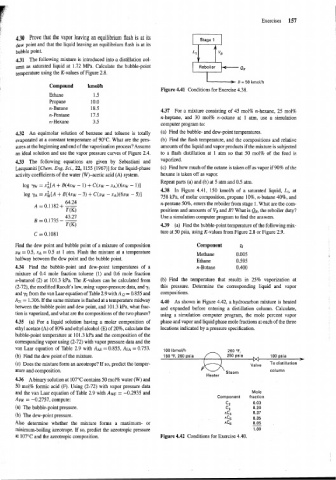
                                                          Figure 4.41  Conditions for Exercise 4.38.
                   Ethane         1.5
                   Propane       10.0
                   n-Butane      18.5
                                                          4.37  For a mixture consisting of 45 mol% n-hexane,  25 mol%
                   n-Pentane     17.5
                                                          n-heptane,  and  30  mol%  n-octane  at  1  atm,  use  a  simulation
                   n-Hexane       3.5
                                                          computer program to:
       4.32  An  equimolar  solution  of  benzene  and  toluene  is  totally   (a)  Find the bubble- and dew-point temperatures.
       evaporated at a constant temperature of 90°C. What are the pres-   (b)  Find the flash temperature, and the compositions and relative
       sures at the beginning and end of the vaporization process? Assume   amounts of the liquid and vapor products if the mixture is subjected
       an ideal solution and use the vapor pressure curves of  Figure 2.4.   to  a  flash  distillation  at  1 atm  so that  50 mol%  of  the  feed  is
                                                          vaporized.
       4.33  The  following  equations  are  given  by  Sebastiani  and
       Lacquaniti [Chem. Eng. Sci., 22, 1155 (1967)l for the liquid-phase   (c)  Find how much of the octane is taken off as vapor if 90% of the
       activity coefficients of the water (W)-acetic  acid (A) system.   hexane is taken off as vapor.
                                                          Repeat parts (a) and (b) at 5 atm and 0.5 atm.
         log  ny = X;[A  + B(4xw  - 1) + C(xw - xA)(6xw - I)]
                                                          4.38  In  Figure  4.41,  150 krnoVh  of  a  saturated  liquid,  L1, at
          log y~ = X&[A + B(4xw - 3) + C(xw - xA)(6xw - 5)]
                                                          758 kPa, of molar composition, propane  lo%, n-butane 40%, and
                                                          n-pentane 50%, enters the reboiler from stage 1. What are the com-
                                                          positions and amounts of VB and B? What is QR,  the reboiler duty?
                                                          Use a simulation computer program to find the answers.
                                                          4.39  (a)  Find the bubble-point temperature of the following mix-
                                                          ture at 50 psia, using K-values from Figure 2.8 or Figure 2.9.

       Find the dew point and bubble point of a mixture of composition   Component    Zi
       xw  = 0.5, XA = 0.5  at  1 atm. Flash the mixture  at a temperature
                                                                       Methane       0.005
       halfway between the dew point and the bubble point.             Ethane        0.595
       4.34  Find  the  bubble-point  and  dew-point  temperatures  of  a   n-Butane   0.400
       mixture of  0.4  mole  fraction  toluene  (1)  and  0.6  mole  fraction
       n-butanol (2) at 101.3 Ha. The K-values can be calculated from   (b)  Find  the  temperature  that  results  in  25%  vaporization  at
       (2-72), the modified Raoult's law, using vapor-pressure data, and yl   this  pressure.  Determine  the  corresponding  liquid  and  vapor
       and  from the van Lax equation of Table 2.9 withAI2 = 0.855 and   compositions.
       AZI = 1.306. If the same mixture is flashed at a temperature midway   4.40  As shown in Figure 4.42, a hydrocarbon mixture is heated
       between the bubble point and dew point, and 101.3 kPa, what frac-   and  expanded  before  entering  a  distillation  column.  Calculate,
       tion is vaporized, and what are the compositions of the two phases?   using  a  simulation  computer  program,  the  mole  percent  vapor
       4.35  (a)  For  a  liquid  solution  having  a  molar  composition  of   phase and vapor and liquid phase mole fractions at each of the three
       ethyl acetate (A) of 80% and ethyl alcohol (E) of 20%, calculate the   locations indicated by a pressure specification.
       bubble-point temperature at 101.3 kPa and the composition of the
       corresponding vapor using (2-72) with vapor pressure data and the
       van Laar equation  of Table 2.9  with AAE = 0.855, AEA = 0.753.   100 Ibmollh   260 OF,
       (b)  Find the dew point of the mixture.             150 OF, 260 psia      250 psia   h A   100 psia   *
       (c)  Does the mixture form an azeotrope? If so, predict the temper-
       ature and composition.
       4.36  Abinary solution at 107OC contains 50 mol% water (W) and
       50 mol% formic acid (F). Using (2-72) with vapor pressure  data
       and the van Laar equation of Table 2.9 with AWF = -0.2935  and                     Mole
                                                                              Component   fraction
       AFW = -0.2757,  compute:
                                                                                 C2        0.03
       (a)  The bubble-point pressure.                                           c3        0.20
       (b)  The dew-point pressure.                                              nC4       0.37
                                                                                 nC5       0.35
       Also  determine  whether  the  mixture  forms  a  maximum-  or            nC6      -
                                                                                           0.05
       minimum-boiling azeotrope. If so, predict the azeotropic pressure                   1 .oo
       at 107°C and the azeotropic composition.           Figure 4.42  Conditions for Exercise 4.40.

