


Page 188 - Separation process principles 2
P. 188
Exercises  153


                                                          (a)  At what temperature does vaporization begin?
         Equilibrium liquid         Exit equilibrium vapor   (b)  What  is  the  composition  of  the  first  bubble  of  equilibrium
                                                  >
         from another stage              Tv, Pv, Y,       vapor formed?
                                                          (c)  What is the composition of the residual liquid when 25 mol%
                                                          has evaporated? Assume that all vapor formed is retained within the
                                                          apparatus and that it is completely mixed and in equilibrium with
         Feed vapor                        L'
                                                          the residual liquid.
                         Equilibrium   Exit equilibrium
                            stage      liquid phase   *   (d)  Repeat part (c) for 90 mol% vaporized.
         Feed liquid                    T,,', P:,   xi1   (e)  Repeat part (d) if, after 25 mol% is vaporized as in part (c), the
                                                          vapor formed is removed and an additional 35 mol% is vaporized
                                                          by the same technique used in part (c).
                                                          (f)  Plot the temperature  versus the percent vaporized for parts (c)
                                           LIT            and (e).
         Equilibrium vapor            Exit equilibrium    (g)  Use  the following  vapor  pressure  data in conjunction  with
         from another stage            liquid phase II   -   Raoult's  and  Dalton's  laws to construct  a  T-x-y  diagram, and
                                                  r
                                       T,",  P,",  x,"    compare it for the answers obtained in parts (a) and (f) wit11 those
                             Q
                                                          obtained using the experimental  T-x-y  data. What do you  con-
                           Heat to                        clude  about  the  applicability  of  Raoult's  law  to  this  binary
                         (+) or from (-)                  system?
                          the stage
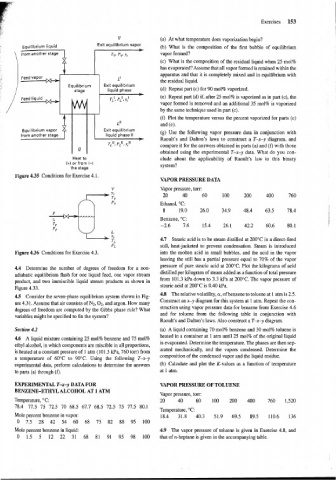
       Figure 4.35  Conditions for Exercise 4.1.
                                                          VAPOR PRESSURE DATA
                                                          Vapor pressure, torr:
                                                           20     40     60     100     200    400     760
                                                          Ethanol, "C:
                                                           8    19.0    26.0    34.9   48.4    63.5    78.4
                                                          Benzene, "C:
                                                          -2.6    7.6    15.4   26.1    42.2   60.6    80.1

                                                          4.7  Stearic acid is to be steam distilled at 200°C in a direct-fired
                                         '.
                                         PL               still, heat-jacketed  to prevent  condensation.  Steam is introduced
       Figure 4.36  Conditions for Exercise 4.3.          into the molten  acid in small bubbles,  and the acid in the  vapor
                                                          leaving the still has a partial pressure equal to 70% of the vapor
                                                          pressure of pure stearic acid at 200°C. Plot the kilograms of acid
       4.4  Determine  the  number  of  degrees  of  freedom  for  a  non-
                                                          distilled per kilogram of steam added as a function of total pressure
       adiabatic equilibrium  flash for one liquid feed, one vapor stream
                                                          from 101.3 kPa down to 3.3 kPa at 200°C. The vapor pressure of
       product, and two immiscible  liquid  stream products  as shown in
                                                          stearic acid at 200°C is 0.40 kPa.
       Figure 4.33.
                                                          4.8  The relative volatility, a, of benzene to toluene at 1 atm is 2.5.
       4.5  Consider the seven-phase equilibrium system shown in Fig-
                                                          Construct an x-y  diagram for this system at 1 atm. Repeat the con-
       ure 4.3 1. Assume that air consists of N2, 02, and argon. How many
                                                          struction using vapor pressure data for benzene from Exercise 4.6
       degrees of freedom are computed by the Gibbs phase rule? What
                                                          and  for  toluene  from  the  following  table  in  conjunction  with
       variables might be specified to fix the system?
                                                          Raoult's  and Dalton's  laws. Also construct a T-x-y  diagram.
       Section 4.2                                        (a)  A liquid containing 70 mol% benzene and 30 mol% toluene is
                                                          heated in a container at 1 atm until 25 mol% of the original liquid
       4.6  A liquid mixture containing 25 mol% benzene and 75 mol%
                                                          is evaporated. Determine the temperature. The phases are then sep-
       ethyl alcohol, in which components are miscible in all proportions,
                                                          arated  mechanically,  and  the  vapors  condensed.  Determine  the
       is heated at a constant pressure of 1 atm (101.3 kPa, 760 ton) from
                                                          composition of the condensed vapor and the liquid residue.
       a  temperature  of  60°C  to  90°C.  Using  the  following  T-x-y
       experimental data, perform calculations to determine the answers   (b)  Calculate  and plot the K-values as a function of temperature
       to parts (a) through (f).                          at 1 atm.
       EXPERIMENTAL T-X-y  DATA FOR                       VAPOR PRESSURE OF TOLUENE
      BENZENE-ETHYL ALCOHOL AT 1 ATM
                                                          Vapor pressure, torr:
      Temperature, "C:                                    20    40     60   100   200    400    760   1,520
       78.4  77.5  75  72.5  70  68.5  67.7  68.5  72.5  75  77.5  80.1
                                                          Temperature, "C:
      Mole percent benzene in vapor:                      18.4   31.8   40.3   51.9   69.5   89.5   110.6   136
       0  7.5  28  42  54  60  68  73  82  88  95  100
       Mole percent benzene in liquid:                    4.9  The vapor pressure of toluene is given in Exercise 4.8,  and
       0   1.5   5   12  22  31  68  81  91  95  98   100   that of n-heptane is given in the accompanying table.

