


Page 373 - Sustainable On-Site CHP Systems Design, Construction, and Operations
P. 373
346    Ca s e  S t u d y 3


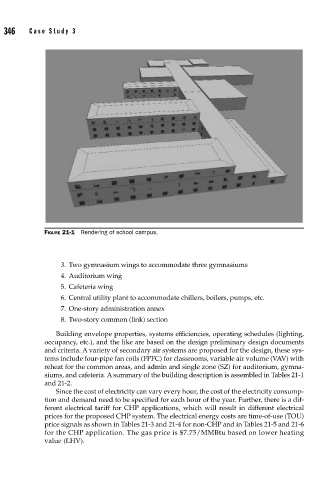
             FIGURE 21-1  Rendering of school campus.


                  3.  Two gymnasium wings to accommodate three gymnasiums
                  4. Auditorium wing
                  5. Cafeteria wing
                  6.  Central utility plant to accommodate chillers, boilers, pumps, etc.
                  7.  One-story administration annex
                  8.  Two-story common (link) section

                Building envelope properties, systems efficiencies, operating schedules (lighting,
             occupancy, etc.), and the like are based on the design preliminary design documents
             and criteria. A variety of secondary air systems are proposed for the design, these sys-
             tems include four-pipe fan coils (FPFC) for classrooms, variable air volume (VAV) with
             reheat for the common areas, and admin and single zone (SZ) for auditorium, gymna-
             siums, and cafeteria. A summary of the building description is assembled in Tables 21-1
             and 21-2.
                Since the cost of electricity can vary every hour, the cost of the electricity consump-
             tion and demand need to be specified for each hour of the year. Further, there is a dif-
             ferent electrical tariff for CHP applications, which will result in different electrical
             prices for the proposed CHP system. The electrical energy costs are time-of-use (TOU)
             price signals as shown in Tables 21-3 and 21-4 for non-CHP and in Tables 21-5 and 21-6
             for the CHP application. The gas price is $7.75/MMBtu based on lower heating
             value (LHV).

