


Page 210 -
P. 210
178  CHAPTER 5 / INTERNAL MEMORY

                  DDR SDRAM
                  SDRAM is limited by the fact that it can only send data to the processor once per
                  bus clock cycle.A new version of SDRAM, referred to as double-data-rate SDRAM
                  can send data twice per clock cycle, once on the rising edge of the clock pulse and
                  once on the falling edge.
                       DDR DRAM was developed by the JEDEC Solid State Technology Associa-
                  tion, the Electronic Industries Alliance’s semiconductor-engineering-standardization
                  body. Numerous companies make DDR chips, which are widely used in desktop
                  computers and servers.
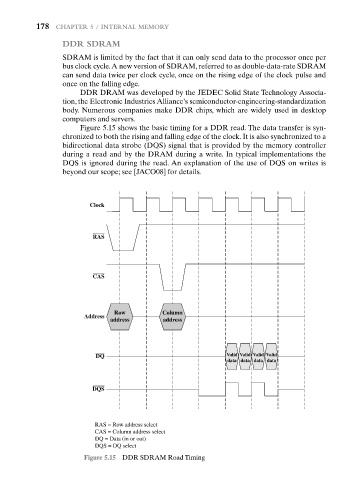
                       Figure 5.15 shows the basic timing for a DDR read. The data transfer is syn-
                  chronized to both the rising and falling edge of the clock. It is also synchronized to a
                  bidirectional data strobe (DQS) signal that is provided by the memory controller
                  during a read and by the DRAM during a write. In typical implementations the
                  DQS is ignored during the read. An explanation of the use of DQS on writes is
                  beyond our scope; see [JACO08] for details.


                          Clock


                          RAS


                          CAS


                                Row          Column
                        Address
                               address        address


                           DQ                                  Valid Valid Valid Valid
                                                               data data data data


                          DQS


                           RAS = Row address select
                           CAS = Column address select
                           DQ = Data (in or out)
                           DQS = DQ select
                        Figure 5.15 DDR SDRAM Road Timing

