


Page 607 - Instrumentation Reference Book 3E
P. 607
Underwater non-destructive testing  589
               444                                    able of operation at and below the surface of the
                         Fluorescent screen           sea. Because of high capital costs, large operating
                                                      costs,  and  public  interest  the  structures  are
                         Photoelectric layer
                                                      expected to operate all the year round  and to be
                                                      re-certificated by  relevant  authorities and insur-
                                                      ance companies typically on a five-year renewal
                         4-3                          basis.
                          I                            The  annual  inspection  program  must  be
                          I                           planned  around  limited  opportunities  and  nor-
                          I                           mally covers:
                         94                           (1)  Areas of previous repair;
                          I
                                                      (2)  Areas of high stress;
                                                      (3)  Routine inspection on a five-pear cycle
                                                       The  accumulated  inspection  records  are  of
                                                      great  importance.  The  inspection is designed to
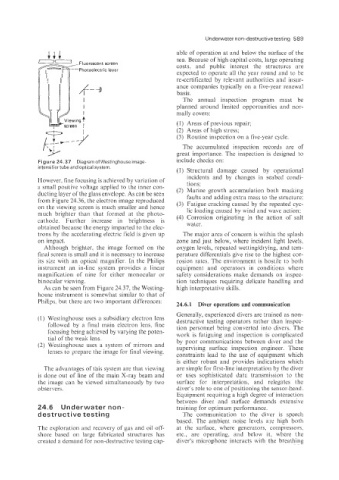
             Figure 24.37  Diagram of Westinghouse image.   include checks on:
             intensifi’er tube and optical system.
                                                      (1)  Structural  damage  caused  by  operational
                                                         incidents  and  by  changes  in  seabed  condi-
            However, fine focusing is achieved by variation of   tions;
            a small positive voltage applied to the inner con-   (2)  Marine  growth  accumulation  both  masking
            ducting layer of the glass envelope. As can be seen   faults and adding extra mass to the structure;
            from Figure 24.36, the electron image reproduced   (3)  Fatigue cracking caused by the repeated cyc-
             on the viewing screen is much smaller and hence
                                                         lic loading caused by wind and wave action;
            much  brighter  than  that  formed  at  the  photo-   (4)  Corrosion  originating  in  the  action  of  salt
            cathode,  Further  increase  in  brightness  is
             obtained because the energy imparted to the elec-   water.
            trons by the accelerating electric field is given up   The major area of concern is within the splash
            on impact.                                zone and just  below, where incident light levels;
              Although  brighter,  the  image  formed  on  the   oxygen levels, repeated wetting/drying, and tem-
            final screen is small and it is necessary to increase   perature differentials give rise to the highest cor-
            its size with  an  optical magnifier. In  the Philips   rosion  rates.  The environment  is hostile to both
             instrument  an  in-line  system  provides  a  linear   equipment  and  operators  in  conditions  where
            magnification  of  nine  for  either  monocular  or   safety considerations  make  demands  on  inspec-
             binocular viewing.                       tion  techniques  requiring  delicate  handling  and
              As can be seen from Figure 24.37, the Westing-   high interpretative skills.
            house instrument is somewhat similar to that of
            Phi1ip:r; but there are two important differences:
                                                      24.6.1  Diver operations and communication
                                                      Generally, experienced divers are trained as non-
            (1)  Westinghouse uses a subsidiary electron lens   destructive testing  operators  rather  than  inspec-
               followed  by  a  final  main  electron  lens, fine   tion personnel  being converted  into divers. The
               focusing being achieved by varying the poten-   work  is fatiguing  and inspection  is  complicated
               tial of the weak lens.                 by  poor communications  between diver and the
             (2) Westinghouse  uses  a  system of  mirrors  and   supervising  surface  inspection  engineer.  These
                lenses to prepare the image for final viewing.   constraints  lead  to  the use  of  equipment  which
                                                      is  either  robust  and  provides  indications  which
              The advantages of this system are that viewing   are simple for first-line interpretation by the diver
             is done out of  line of  the main  X-ray beam and   or  uses  sophisticated  data  transmission  to  the
             the image can  be viewed  simultaneously by  two   surface  for  interpretation,  and  relegates  the
            observers.                                diver’s role to one of positioning the sensor-head.
                                                      Equipment requiring a high degree of interaction
                                                      between  diver  and  surface  demands  extensive
             24-61 Underwater non-                    training for optimum performance.
             deslt ru c t ive testing                  The  communication  to  the  diver  is  speech
                                                      based.  The  ambient  noise  levels  are  high  both
            The exploration and recovery of  gas and oil off-   at  the  surface,  where  generators,  compressors,
             shore  based  on  large  fabricated  structures  has   etc.,  are  operating,  and  below  it,  where  the
             created a demand for non-destructive testing cap-   diver’s microphone  interacts  with  the  breathing

