


Page 242 - Modular design for machine tools
P. 242
202   Engineering Design for Machine Tool Joints


                   1.4            b* values


                   1.2           ground                   7.5

                                              Flatness deviation for ground
                   1.0


                   0.8                                    5.0
                  b*, mm –1


                   0.6                                        Flatness deviation, mm


                   0.4                                    2.5

                                  b* values
                   0.2            shaped


                    0    20  40   60  80   100  120  140  160
                                Diameter of joint, mm
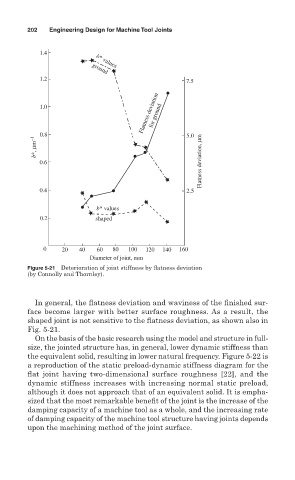
               Figure 5-21 Deterioration of joint stiffness by flatness deviation
               (by Connolly and Thornley).


                 In general, the flatness deviation and waviness of the finished sur-
               face become larger with better surface roughness. As a result, the
               shaped joint is not sensitive to the flatness deviation, as shown also in
               Fig. 5-21.
                 On the basis of the basic research using the model and structure in full-
               size, the jointed structure has, in general, lower dynamic stiffness than
               the equivalent solid, resulting in lower natural frequency. Figure 5-22 is
               a reproduction of the static  preload-dynamic stiffness diagram for the
               flat joint having two-dimensional surface roughness [22], and the
               dynamic stiffness increases with increasing normal static preload,
               although it does not approach that of an equivalent solid. It is empha-
               sized that the most remarkable benefit of the joint is the increase of the
               damping capacity of a machine tool as a whole, and the increasing rate
               of damping capacity of the machine tool structure having joints depends
               upon the machining method of the joint surface.

