


Page 142 - Volcanic Textures A Guide To The Interpretation of Textures In Volcanic Rocks
P. 142
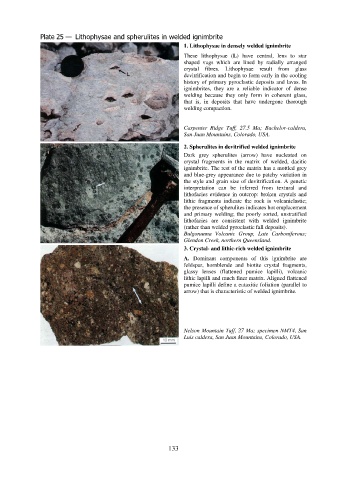
Plate 25 —  Lithophysae and spherulites in welded ignimbrite
                                                                  1. Lithophysae in densely welded ignimbrite

                                                                  These lithophysae (L) have central, lens to star
                                                                  shaped  vugs  which are lined  by radially arranged
                                                                  crystal fibres. Lithophysae result from glass
                                                                  devitrification and begin to form early in the cooling
                                                                  history of primary pyroclastic deposits and lavas. In
                                                                  ignimbrites, they are a reliable indicator of dense
                                                                  welding  because they only form in coherent glass,
                                                                  that is, in deposits that have undergone thorough
                                                                  welding compaction.


                                                                  Carpenter Ridge Tuff, 27.5 Ma; Bachelor-caldera,
                                                                  San Juan Mountains, Colorado, USA.

                                                                  2. Spherulites in devitrified welded ignimbrite
                                                                  Dark grey spherulites (arrow)  have nucleated on
                                                                  crystal fragments in the matrix of welded,  dacitic
                                                                  ignimbrite. The rest of the matrix has a mottled grey
                                                                  and blue-grey appearance due to patchy variation in
                                                                  the style and grain size of devitrification. A genetic
                                                                  interpretation  can be inferred from textural and
                                                                  lithofacies evidence in outcrop: broken crystals and
                                                                  lithic fragments indicate the rock is  volcaniclastic;
                                                                  the presence of spherulites indicates hot emplacement
                                                                  and primary welding; the poorly sorted, unstratified
                                                                  lithofacies are consistent  with welded ignimbrite
                                                                  (rather than welded pyroclastic fall deposits).
                                                                  Bulgonunna Volcanic Group, Late Carboniferous;
                                                                   Glendon Creek, northern Queensland.
                                                                  3. Crystal- and lithic-rich welded ignimbrite
                                                                  A.  Dominant components of this ignimbrite are
                                                                  feldspar,  hornblende and  biotite crystal fragments,
                                                                  glassy lenses (flattened  pumice  lapilli), volcanic
                                                                  lithic lapilli and much finer matrix. Aligned flattened
                                                                  pumice lapilli define a eutaxitic foliation (parallel to
                                                                  arrow) that is characteristic of welded ignimbrite.


                                                                  Nelson Mountain Tuff, 27 Ma; specimen NMT4, San
                                                                  Luis caldera, San Juan Mountains, Colorado, USA.


                                                            133

