


Page 160 - Introduction to Mineral Exploration
P. 160
7: GEOPHYSICAL METHODS  143


                                                  1.0

                                                                             In-phase      α α 2
                                                  0.8                                 In-phase response


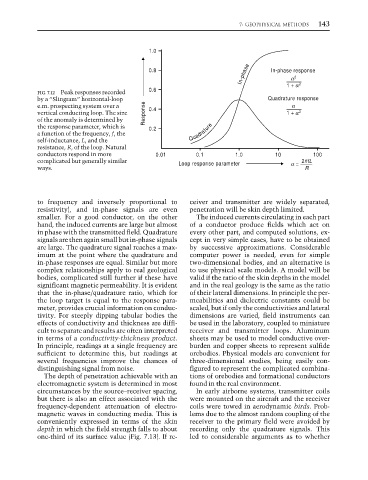
                 FIG. 7.12  Peak responses recorded  0.6                                  1 + α α 2
                 by a “Slingram” horizontal-loop                                     Quadrature response
                 e.m. prospecting system over a   0.4                                       α α
                 vertical conducting loop. The size  Response                             1 + α α 2
                 of the anomaly is determined by
                 the response parameter, which is  0.2
                 a function of the frequency, f, the          Quadrature
                 self-inductance, L, and the
                 resistance, R, of the loop. Natural
                 conductors respond in more         0.01        0.1        1.0         10         100
                                                                                               π
                 complicated but generally similar         Loop response parameter         α =  2πfL
                 ways.                                                                         R


                 to frequency and inversely proportional to   ceiver and transmitter are widely separated,
                 resistivity), and in-phase signals are even  penetration will be skin depth limited.
                 smaller. For a good conductor, on the other    The induced currents circulating in each part
                 hand, the induced currents are large but almost  of a conductor produce fields which act on
                 in phase with the transmitted field. Quadrature  every other part, and computed solutions, ex-
                 signals are then again small but in-phase signals  cept in very simple cases, have to be obtained
                 are large. The quadrature signal reaches a max-  by successive approximations. Considerable
                 imum at the point where the quadrature and   computer power is needed, even for simple
                 in-phase responses are equal. Similar but more  two-dimensional bodies, and an alternative is
                 complex relationships apply to real geological  to use physical scale models. A model will be
                 bodies, complicated still further if these have  valid if the ratio of the skin depths in the model
                 significant magnetic permeability. It is evident  and in the real geology is the same as the ratio
                 that the in-phase/quadrature ratio, which for  of their lateral dimensions. In principle the per-
                 the loop target is equal to the response para-  meabilities and dielectric constants could be
                 meter, provides crucial information on conduc-  scaled, but if only the conductivities and lateral
                 tivity. For steeply dipping tabular bodies the  dimensions are varied, field instruments can
                 effects of conductivity and thickness are diffi-  be used in the laboratory, coupled to miniature
                 cult to separate and results are often interpreted  receiver and transmitter loops. Aluminum
                 in terms of a conductivity-thickness product.  sheets may be used to model conductive over-
                 In principle, readings at a single frequency are  burden and copper sheets to represent sulfide
                 sufficient to determine this, but readings at  orebodies. Physical models are convenient for
                 several frequencies improve the chances of   three-dimensional studies, being easily con-
                 distinguishing signal from noise.            figured to represent the complicated combina-
                   The depth of penetration achievable with an  tions of orebodies and formational conductors
                 electromagnetic system is determined in most  found in the real environment.
                 circumstances by the source–receiver spacing,  In early airborne systems, transmitter coils
                 but there is also an effect associated with the  were mounted on the aircraft and the receiver
                 frequency-dependent attenuation of electro-  coils were towed in aerodynamic birds. Prob-
                 magnetic waves in conducting media. This is  lems due to the almost random coupling of the
                 conveniently expressed in terms of the  skin  receiver to the primary field were avoided by
                 depth in which the field strength falls to about  recording only the quadrature signals. This
                 one-third of its surface value (Fig. 7.13). If re-  led to considerable arguments as to whether

